NTR University of Health Sciences, Vijayawada in inviting applications
through online for admission into Master of Public Health (MPH) course
to be conducted through computer based online entrance test for the
academic year year 2015-16.
The admission into Indian Institute of Public Health (IIPH),
Hyderabad, which is affiliated to Dr. NTR University of Health
Sciences, Vijayawada will be conducted through this entrance exam.
Eligibility: Candidates need Bachelor Degree with at least 50 percent
marks in any discipline. Online applications can be submitted from
28th September to 6th October 2015.
Address: The Convener, Post Graduate Admissions Committee (M.P.H), Dr.
NTR University of Health Sciences, Vijayawada.

CCMB Hyderabad PhD Admissions 2015-16
Centre for Cellular and Molecular Biology (CCMB), Hyderabad has issued
notification inviting applications for admission into Ph.D program in
modern biology.
The research projects offered for Ph.D will be in the broad areas of
Cell Biology, Molecular Biology, Genetics, Genomics, Developmental
Biology, Nanobiology, Plant Molecular Biology, Conservation Biology,
Ecology, Protein Structure and Function, Biology of Macromolecules,
Biology of Infection, Epigenetics, Chromatin Biology and
Bioinformatics.
Eligibility: Candidates should have Masters degree in any branch of
science or a Bachelors degree in Engineering, Pharmacy or Medicine
having a valid National level fellowship (JRF/ SRF of various funding
agencies such as CSIR, UGC, DBT, ICMR), DST - INSPIRE or any
equivalent fellowship can only apply.
Age: Should be below 28 years as on 7 November 2015. Interested
candidates may apply online by 7 November 2015.
notification inviting applications for admission into Ph.D program in
modern biology.
The research projects offered for Ph.D will be in the broad areas of
Cell Biology, Molecular Biology, Genetics, Genomics, Developmental
Biology, Nanobiology, Plant Molecular Biology, Conservation Biology,
Ecology, Protein Structure and Function, Biology of Macromolecules,
Biology of Infection, Epigenetics, Chromatin Biology and
Bioinformatics.
Eligibility: Candidates should have Masters degree in any branch of
science or a Bachelors degree in Engineering, Pharmacy or Medicine
having a valid National level fellowship (JRF/ SRF of various funding
agencies such as CSIR, UGC, DBT, ICMR), DST - INSPIRE or any
equivalent fellowship can only apply.
Age: Should be below 28 years as on 7 November 2015. Interested
candidates may apply online by 7 November 2015.
NTRUHS Medical Counseling for NCC and Sports Categories 2015-16
Dr NTR University of Health Sciences (NTRUHS), Vijayawada has issued notification for counseling for admission into affiliated medical and dental colleges in state of Andhra Pradesh and Telangana under special category seats, NCC, Sports and Games etc.
Counseling for Andhra Pradesh students:
Date: 29th September - NCC
30th September - Sports and Games
Counseling for Telangana students:
Date: 29th September 2015 - NCC
30th September: Sports and Games
Venue: Dr NTRUHS, Vijayawada (For both counselings)
The priority lists of sports and games will be displayed at the counseling center. For more details, see the website ntruhs.ap.nic.in .
Counseling for Andhra Pradesh students:
Date: 29th September - NCC
30th September - Sports and Games
Counseling for Telangana students:
Date: 29th September 2015 - NCC
30th September: Sports and Games
Venue: Dr NTRUHS, Vijayawada (For both counselings)
The priority lists of sports and games will be displayed at the counseling center. For more details, see the website ntruhs.ap.nic.in .
Junior Inter Botany Imp Questions 4 Marks for IPE Exams in AP and TS
Q: Explain binomial nomenclature.
A: Binomial nomenclature is the system of naming an organism with two
components. It was first proposed by Caspar Bauhin and later
popularised by Carolus Linnaeus. The biological names are written in
italics or underlined when handwritten or printed.
The first word is the genus or generic name which starts with a
capital letter. The second word is the species or specific epithet
which starts with a small letter. Name of the author may be written
after the species. Ex: Mangifera indica is the biological or botanical
name of mango. Mangifera is the generic name and indica is the
specific epithet.
Q: How are botanical gardens useful in conserving biodiversity? Define the
terms flora, manuals, monographs and catalogues.
A: As living plant species are carefully collected and grown for
identification and scientific study in botanical gardens they are much
useful in conserving biodiversity. Flora: It is a book that contains
actual account of habitat and distribution of plants in a given area.
Manual: It gives information for identification of names of species in
an area.
Monograph: It contains information on any one taxon.
Catalogue: It contains list of plant names in a specific order.
A: Binomial nomenclature is the system of naming an organism with two
components. It was first proposed by Caspar Bauhin and later
popularised by Carolus Linnaeus. The biological names are written in
italics or underlined when handwritten or printed.
The first word is the genus or generic name which starts with a
capital letter. The second word is the species or specific epithet
which starts with a small letter. Name of the author may be written
after the species. Ex: Mangifera indica is the biological or botanical
name of mango. Mangifera is the generic name and indica is the
specific epithet.
Q: How are botanical gardens useful in conserving biodiversity? Define the
terms flora, manuals, monographs and catalogues.
A: As living plant species are carefully collected and grown for
identification and scientific study in botanical gardens they are much
useful in conserving biodiversity. Flora: It is a book that contains
actual account of habitat and distribution of plants in a given area.
Manual: It gives information for identification of names of species in
an area.
Monograph: It contains information on any one taxon.
Catalogue: It contains list of plant names in a specific order.
Inter First Year Botany Important Questions for IPE Exams of AP and Telangana
Q: Why is Mendel considered as father of genetics?
A: As Mendel introduced the laws of inheritance he is considered as
the father of genetics.
Q: Who discovered the cell and what was the book written by him?
A: Robert Hooke.
Micrographia.
Q: Name the branches of Botany which deal with the chlorophyllous
autotrophic thallophytes and non-chlorophyllous heterotrophic
thallophytes.
A: Phycology deals with algae (chlorophyllous autotrophic thallophytes).
Mycology deals with fungi (non-chlorophyllous heterotrophic thallophytes).
Q: What is the basis of classification of algae?
A: a) Pigmentation and b) Type of food stored.
Q: Differentiate between syngamy and triple fusion.
A: Syngamy is the fusion of first male gamete with the female egg cell
to form a diploid zygote.
Triple fusion is the fusion of second male gamete with diploid
secondary nucleus to form a triploid primary endosperm nucleus.
Q: Name the stored food materials found in Phaeophyceae and Rhodophyceae.
A: Phaeophyceae - stored food is laminarin or mannitol.
Rhodophyceae - stored food is Floridian starch.
Q: Name the pigments responsible for brown colour of Phaeophyceae and
red colour of Rhodophyceae.
A: Fucoxanthin - brown colour of Phaeophyceae.
r-Phycoerythrin - red colour of Rhodophyceae.
Q: Name the integumented megasporangium found in Gymnosperms. How many
female gametophytes are generally formed inside the megasporangium?
A: Ovule - Integumented megasporangium.
One female gametophyte.
Q: Name the gymnosperms which contain mycorrhizae and coralloid roots
respectively.
A: Pinus - Mycorrhizae
Cycas - coralloid roots.
Q: What the first organisms to colonise rocks? Give the generic name
of the moss which provides peat.
A: Lichens and mosses - first organisms to colonize rocks. . Sphagnum
moss provides peat.
Q: Which group of plants is called vascular cryptogams?
Name the branch of Botany which deals with them?
A: Pteridophyta.
Pteridology.
A: As Mendel introduced the laws of inheritance he is considered as
the father of genetics.
Q: Who discovered the cell and what was the book written by him?
A: Robert Hooke.
Micrographia.
Q: Name the branches of Botany which deal with the chlorophyllous
autotrophic thallophytes and non-chlorophyllous heterotrophic
thallophytes.
A: Phycology deals with algae (chlorophyllous autotrophic thallophytes).
Mycology deals with fungi (non-chlorophyllous heterotrophic thallophytes).
Q: What is the basis of classification of algae?
A: a) Pigmentation and b) Type of food stored.
Q: Differentiate between syngamy and triple fusion.
A: Syngamy is the fusion of first male gamete with the female egg cell
to form a diploid zygote.
Triple fusion is the fusion of second male gamete with diploid
secondary nucleus to form a triploid primary endosperm nucleus.
Q: Name the stored food materials found in Phaeophyceae and Rhodophyceae.
A: Phaeophyceae - stored food is laminarin or mannitol.
Rhodophyceae - stored food is Floridian starch.
Q: Name the pigments responsible for brown colour of Phaeophyceae and
red colour of Rhodophyceae.
A: Fucoxanthin - brown colour of Phaeophyceae.
r-Phycoerythrin - red colour of Rhodophyceae.
Q: Name the integumented megasporangium found in Gymnosperms. How many
female gametophytes are generally formed inside the megasporangium?
A: Ovule - Integumented megasporangium.
One female gametophyte.
Q: Name the gymnosperms which contain mycorrhizae and coralloid roots
respectively.
A: Pinus - Mycorrhizae
Cycas - coralloid roots.
Q: What the first organisms to colonise rocks? Give the generic name
of the moss which provides peat.
A: Lichens and mosses - first organisms to colonize rocks. . Sphagnum
moss provides peat.
Q: Which group of plants is called vascular cryptogams?
Name the branch of Botany which deals with them?
A: Pteridophyta.
Pteridology.
IPE First Year Botany Important Questions for 2 Marks - AP and Telangana Boards
Q: What do the terms phycobiont and mycobiont signify?
A: Phycobiont is the algal partner of a lichen.
Mycobiont is the fungal partner of a lichen.
Q: What do the terms 'algal blooms' and 'red tides' signify?
A: The vast colonies and filaments of algae which are found in
polluted water bodies are called algal blooms.
The rapid multiplication of red dinoflagellates like Gonyaulax makes
sea water appear red which are called red tides in Mediterranean sea.
Q: State two economically important uses of heterotrophic bacteria.
A: Heterotrophic bacteria are used in production of antibiotics.
Rhizobium is used in fixing atmospheric nitrogen in agricultural lands.
Lactobacillus is used in making curd from milk.
Q: What is the principle underlying the use of cyanobacteria in
agricultural fields for crop improvement?
A: Cyanobacteria like Nostoc and Anabaena possess special cells called
heterocysts which can fix atmospheric nitrogen. Hence they can be used
in agriculture for crop improvement.
Q: Plants are autotrophic. Name some plants which are partially heterotrophic.
A: Partially heterotrophic plants . Bladder wort (Utricularia)
Venus fly trap (Dionea)
Q: Who proposed five kingdom classification? How many kingdoms of this
classification contain eukaryotes?
A: R.H. Whittaker.
Four (4) kingdoms
(Protista, Fungi, Plantae and Animalia).
Q: Give the main criteria used for classification by Whittaker.
A: a. Cell structure b. Thallus organization c. Mode of nutrition
d. Reproduction e. Phylogenetic relationships
Q: Name two diseases caused by Mycoplasmas.
A: Witches broom in plants.
Pleuropneumonia in cattle.
Mycoplasmal urethritis in humans.
Q: What are slime moulds? Explain what is meant by plasmodium with
reference to slime moulds.
A: Slime moulds are saprophytic multinucleated protists.
The large multinucleated aggregation formed by slime moulds during
favourable conditions is called a plasmodium.
Q: Explain how the term botany has emerged.
A: 'Bous' in greek means cattle and 'Bouskein' means cattle feed. The
word bouskein gave rise to 'Botane' and then 'Botany'.
Q: Name the books written by Parasara and mention the important
aspects discussed in those books.
A: a. Krishi parasaram - deals with agriculture and weeds.
b. Vrikshayurveda - deals with different types of forests, external
and internal characters of plants (medicinal plants).
Q: Who is popularly known as father of Botany? What was the book written by him?
A: Theophrastus.
De Historia Plantarum.
Q: Who are herbalists? What are the books written by them?
A: The botanists who identified and described medicinal plants during
16th and 17th centuries were called herbalists.
Herbals.
A: Phycobiont is the algal partner of a lichen.
Mycobiont is the fungal partner of a lichen.
Q: What do the terms 'algal blooms' and 'red tides' signify?
A: The vast colonies and filaments of algae which are found in
polluted water bodies are called algal blooms.
The rapid multiplication of red dinoflagellates like Gonyaulax makes
sea water appear red which are called red tides in Mediterranean sea.
Q: State two economically important uses of heterotrophic bacteria.
A: Heterotrophic bacteria are used in production of antibiotics.
Rhizobium is used in fixing atmospheric nitrogen in agricultural lands.
Lactobacillus is used in making curd from milk.
Q: What is the principle underlying the use of cyanobacteria in
agricultural fields for crop improvement?
A: Cyanobacteria like Nostoc and Anabaena possess special cells called
heterocysts which can fix atmospheric nitrogen. Hence they can be used
in agriculture for crop improvement.
Q: Plants are autotrophic. Name some plants which are partially heterotrophic.
A: Partially heterotrophic plants . Bladder wort (Utricularia)
Venus fly trap (Dionea)
Q: Who proposed five kingdom classification? How many kingdoms of this
classification contain eukaryotes?
A: R.H. Whittaker.
Four (4) kingdoms
(Protista, Fungi, Plantae and Animalia).
Q: Give the main criteria used for classification by Whittaker.
A: a. Cell structure b. Thallus organization c. Mode of nutrition
d. Reproduction e. Phylogenetic relationships
Q: Name two diseases caused by Mycoplasmas.
A: Witches broom in plants.
Pleuropneumonia in cattle.
Mycoplasmal urethritis in humans.
Q: What are slime moulds? Explain what is meant by plasmodium with
reference to slime moulds.
A: Slime moulds are saprophytic multinucleated protists.
The large multinucleated aggregation formed by slime moulds during
favourable conditions is called a plasmodium.
Q: Explain how the term botany has emerged.
A: 'Bous' in greek means cattle and 'Bouskein' means cattle feed. The
word bouskein gave rise to 'Botane' and then 'Botany'.
Q: Name the books written by Parasara and mention the important
aspects discussed in those books.
A: a. Krishi parasaram - deals with agriculture and weeds.
b. Vrikshayurveda - deals with different types of forests, external
and internal characters of plants (medicinal plants).
Q: Who is popularly known as father of Botany? What was the book written by him?
A: Theophrastus.
De Historia Plantarum.
Q: Who are herbalists? What are the books written by them?
A: The botanists who identified and described medicinal plants during
16th and 17th centuries were called herbalists.
Herbals.
Junior Inter Botany Important 2 Marks Questions of 1-4 Chapters
Q: What does ICBN stand for?
A: ICBN stands for International Code for Botanical Nomenclature.
Q: What is flora?
A: Flora is a book that contains the actual account of habitat,
distribution and systematic listing of plants of a given area.
Q: Define metabolism. What is the difference between anabolism and catabolism?
A: Metabolism is the sum total of all chemical reactions occurring in
the body of a living organism. Anabolism refers to the synthesis of
bigger molecules from small molecules during chemical reactions. In
one way it is a constructive process. Catabolism is the breakdown of
bigger molecules into smaller ones. It is a destructive or lytic
process.
Q: Which is the largest botanical garden in the world? Name a few well
known botanical gardens in India.
A: Largest botanical garden in the world - (Royal) Botanical garden or Kew
botanical garden - England.
Botanical gardens in India: Indian
Botanical garden - Howrah, National
Botanical Research Institute - Lucknow.
Q: Define the terms couplet and lead in taxonomic key.
A: A pair of contrasting characters in a key is called a couplet.
Each statement in the key is called a lead.
Q: What is the basic unit of classification? Define it.
A: Species is the basic unit of classification. Species is a group of
individual organisms with fundamental similarities.
Q: What is growth? What is the difference between the growth in living
organisms and growth in non-living objects?
A: Increase in mass and volume of an individual is called growth.
Growth in living organisms is internal which occurs by cell division.
Growth in non-living objects is external that is by accumulation of
materials outside.
Q: What is the nature of cell-walls in diatoms?
A: The cell wall in diatoms is made up of two overlapping halves
called epitheca and hypotheca which give the appearance of a soapbox.
It is made up of hard and indestructible silica.
Q: How are viroids different from viruses?
A: Viroids differ from viruses in lacking a protein coat.
Ex: Potato spindle tuber viroid. Viroid contains only nucleic acid
(RNA) whereas virus contains nucleic acid and protein coat.
Q: Give the scientific name of Mango. Identify the generic name and
specific epithet.
A: Mango - Mangifera indica
Generic name - Mangifera
Specific epithet - indica
Q: Give two examples for unicellular, colonial and filamentous algae. (2 Marks)
A: Chlamydomonas - unicellular alga.
Volvox - colonial alga
Spirogyra and Ulothrix - filamentous alga.
A: ICBN stands for International Code for Botanical Nomenclature.
Q: What is flora?
A: Flora is a book that contains the actual account of habitat,
distribution and systematic listing of plants of a given area.
Q: Define metabolism. What is the difference between anabolism and catabolism?
A: Metabolism is the sum total of all chemical reactions occurring in
the body of a living organism. Anabolism refers to the synthesis of
bigger molecules from small molecules during chemical reactions. In
one way it is a constructive process. Catabolism is the breakdown of
bigger molecules into smaller ones. It is a destructive or lytic
process.
Q: Which is the largest botanical garden in the world? Name a few well
known botanical gardens in India.
A: Largest botanical garden in the world - (Royal) Botanical garden or Kew
botanical garden - England.
Botanical gardens in India: Indian
Botanical garden - Howrah, National
Botanical Research Institute - Lucknow.
Q: Define the terms couplet and lead in taxonomic key.
A: A pair of contrasting characters in a key is called a couplet.
Each statement in the key is called a lead.
Q: What is the basic unit of classification? Define it.
A: Species is the basic unit of classification. Species is a group of
individual organisms with fundamental similarities.
Q: What is growth? What is the difference between the growth in living
organisms and growth in non-living objects?
A: Increase in mass and volume of an individual is called growth.
Growth in living organisms is internal which occurs by cell division.
Growth in non-living objects is external that is by accumulation of
materials outside.
Q: What is the nature of cell-walls in diatoms?
A: The cell wall in diatoms is made up of two overlapping halves
called epitheca and hypotheca which give the appearance of a soapbox.
It is made up of hard and indestructible silica.
Q: How are viroids different from viruses?
A: Viroids differ from viruses in lacking a protein coat.
Ex: Potato spindle tuber viroid. Viroid contains only nucleic acid
(RNA) whereas virus contains nucleic acid and protein coat.
Q: Give the scientific name of Mango. Identify the generic name and
specific epithet.
A: Mango - Mangifera indica
Generic name - Mangifera
Specific epithet - indica
Q: Give two examples for unicellular, colonial and filamentous algae. (2 Marks)
A: Chlamydomonas - unicellular alga.
Volvox - colonial alga
Spirogyra and Ulothrix - filamentous alga.
Junior Inter Physics Imp Questions - Laws of Motion Chapter
Q: Explain advantages and disadvantages of friction. (8 marks)
A: Safe walking on the floor, motion of vehicles are possible due to friction.
Nails, Screws are driven into walls due to friction. Mechanical Power
transmission of belt drive is possible due to friction.
Disadvantages:
Due to friction wear and tear of mechanics increases.
Heat generated due to friction, decreases the efficiency of engine.
Friction results in the large amount of power loss in engines.
Q: Mention the methods used to decrease friction.
A: Polishing: By polishing the surfaces of contact, friction can be reduced.
Bearings: The hard steel balls called bearings placed between the
moving parts converts sliding friction into rolling friction hence
friction is reduced.
Lubricants: Lubricants like oil or grease which spreads over the
surface and fills the irregularities of the surface, there by friction
is reduced.
Streamlining: Automobiles and aeroplanes are streamlined to reduce the
friction due to air.
2 Marks Questions:
Q: What is inertia? What gives the measure of inertia?
A: The inability of a body to change its state of rest or state of
motion by itself is known as inertia. Mass is measure of inertia.
Q: If a bomb at rest explodes into two pieces, the pieces must travel
in opposite directions. Explain.
A: According to Law of Conservation of linear momentum MU = m1v1 +
m2v2 Initially bomb is at rest U = 0
∴ m1v1 = − m2v2
−ve sign indicates that pieces must travel in opposite direction.
Q: Can the coefficient of friction be greater than one?
A: Yes, when the contact surfaces are heavily polished, then the
adhesive forces between molecules increases and coefficient of
friction will be greater than one.
Q: Why does the car with a flattened tyres stop sooner than the one
with inflattened tyres?
A: Flattened tyre deforms more than inflattened tyre. Due to greater
deformation of tyre rolling friction is large, hence it stops sooner.
A: Safe walking on the floor, motion of vehicles are possible due to friction.
Nails, Screws are driven into walls due to friction. Mechanical Power
transmission of belt drive is possible due to friction.
Disadvantages:
Due to friction wear and tear of mechanics increases.
Heat generated due to friction, decreases the efficiency of engine.
Friction results in the large amount of power loss in engines.
Q: Mention the methods used to decrease friction.
A: Polishing: By polishing the surfaces of contact, friction can be reduced.
Bearings: The hard steel balls called bearings placed between the
moving parts converts sliding friction into rolling friction hence
friction is reduced.
Lubricants: Lubricants like oil or grease which spreads over the
surface and fills the irregularities of the surface, there by friction
is reduced.
Streamlining: Automobiles and aeroplanes are streamlined to reduce the
friction due to air.
2 Marks Questions:
Q: What is inertia? What gives the measure of inertia?
A: The inability of a body to change its state of rest or state of
motion by itself is known as inertia. Mass is measure of inertia.
Q: If a bomb at rest explodes into two pieces, the pieces must travel
in opposite directions. Explain.
A: According to Law of Conservation of linear momentum MU = m1v1 +
m2v2 Initially bomb is at rest U = 0
∴ m1v1 = − m2v2
−ve sign indicates that pieces must travel in opposite direction.
Q: Can the coefficient of friction be greater than one?
A: Yes, when the contact surfaces are heavily polished, then the
adhesive forces between molecules increases and coefficient of
friction will be greater than one.
Q: Why does the car with a flattened tyres stop sooner than the one
with inflattened tyres?
A: Flattened tyre deforms more than inflattened tyre. Due to greater
deformation of tyre rolling friction is large, hence it stops sooner.
PGRRCDE Osmania University Admissions 2015-16
Prof G Ram Reddy Center for Distance Education (PGRRCDE), Osmania University Campus, Hyderabad has issued notification for admission into BA, B.Com, BBA, MA, M.Sc, M.Com, MBA and MCA for the academic session 2015-16.
PG Diploma courses: Maths, English, Business Management, Computer Applications, Bioinformatics, Town and Country Planning.
Candidates can obtain application forms in person or by post from Director, PGRRCDE, OU. Forms can also be downloaded from the website www.osmania.ac.in .
Last date for the submission of filled in applications is 7th October 2015. Website for downloading applications and other information is oucde.ac.in OR www.oucde.net .
PG Diploma courses: Maths, English, Business Management, Computer Applications, Bioinformatics, Town and Country Planning.
Candidates can obtain application forms in person or by post from Director, PGRRCDE, OU. Forms can also be downloaded from the website www.osmania.ac.in .
Last date for the submission of filled in applications is 7th October 2015. Website for downloading applications and other information is oucde.ac.in OR www.oucde.net .
NTR Health University Ph.D Admissions 2015-16
Dr NTR University of Health Sciences (NTRUHS), Vijayawada, Andhra Pradesh has announced notification for admission into Ph.D course for the academic year 2015-16. The course is offered in medical sciences or allied subjects.
Filled in applications have to reach the NTR University on or before 20th October 2015. The details of eligibility, selection and application procedure are available on the website ntruhs.ap.nic.in .
The course is offered in full time and part time modes. Candidates should have Masters Degree (MD / MS / DNB / MDS / MD Ayurveda / M.Sc (N) / MPT / M.Sc Medical in any any subject allied to medical sciences of NTRUHS / M.Phil etc.
Application forms can be downloaded from the NTRUHS website from 26th September 2015. Last date is 5th October 2015. List of eligible candidates will be displayed on the website on 11 November 2015.
Filled in applications have to reach the NTR University on or before 20th October 2015. The details of eligibility, selection and application procedure are available on the website ntruhs.ap.nic.in .
The course is offered in full time and part time modes. Candidates should have Masters Degree (MD / MS / DNB / MDS / MD Ayurveda / M.Sc (N) / MPT / M.Sc Medical in any any subject allied to medical sciences of NTRUHS / M.Phil etc.
Application forms can be downloaded from the NTRUHS website from 26th September 2015. Last date is 5th October 2015. List of eligible candidates will be displayed on the website on 11 November 2015.
ePASS - Ambedkar Overseas Vidya Nidhi Scheme for Telangana Students - 2015
The Government of Telangana has informed that the second phase
selection of candidates for Ambedkar Overseas Vidya Nidhi Scheme will
be done in December 2015. Interested SC, ST and Minorities candidates
can apply through Telangana ePASS website.
For Post Graduate Course: Candidates should have 60 percent marks or
equivalent grade in foundation Degree in Engineering / Management /
Pure Sciences /
Agriculture Sciences / Medicine and Nursing /Social Sciences/ Humanities.
For PhD Course: Applicants should have at least 60 percent marks or
equivalent grade in P.G course in Engineering / Management / Pure
Sciences / Agriculture Sciences / Medicine / Social Sciences/
Humanities.
Selection will be based on the annual parental income, admission
status of the candidates and merit and other conditions. Details are
available on Telangana ePass website.
selection of candidates for Ambedkar Overseas Vidya Nidhi Scheme will
be done in December 2015. Interested SC, ST and Minorities candidates
can apply through Telangana ePASS website.
For Post Graduate Course: Candidates should have 60 percent marks or
equivalent grade in foundation Degree in Engineering / Management /
Pure Sciences /
Agriculture Sciences / Medicine and Nursing /Social Sciences/ Humanities.
For PhD Course: Applicants should have at least 60 percent marks or
equivalent grade in P.G course in Engineering / Management / Pure
Sciences / Agriculture Sciences / Medicine / Social Sciences/
Humanities.
Selection will be based on the annual parental income, admission
status of the candidates and merit and other conditions. Details are
available on Telangana ePass website.
University of Hyderabad MBA Program Admissions 2016-18
University of Hyderabad, School of Management Studies has issued
notification for admission into its prestigious two-year full-time MBA
Program for the course year 2016-18.
Eligibility: Candidates should have first class Bachelors degree in
any discipline. They should appear in CAT-2015 to be conducted by the
IIMs on 29th Nov, 2015.
Total seats: 60 students.
Cost of Application Form: General/ OBC - Rs.350 ; SC/ ST/ PH– Rs.150.
Candidates should apply to the University of Hyderabad on or before
30th November, 2015. The applications can be downloaded from the
website.
notification for admission into its prestigious two-year full-time MBA
Program for the course year 2016-18.
Eligibility: Candidates should have first class Bachelors degree in
any discipline. They should appear in CAT-2015 to be conducted by the
IIMs on 29th Nov, 2015.
Total seats: 60 students.
Cost of Application Form: General/ OBC - Rs.350 ; SC/ ST/ PH– Rs.150.
Candidates should apply to the University of Hyderabad on or before
30th November, 2015. The applications can be downloaded from the
website.
AP EAMCET Medical 2015 Second and Final Counselling for MBBA and BDS Courses
Counseling Schedule: 24 to 28 September 2015
The eligible AP - EAMCET 2015 Rank holders who have not secured seat
in the 1st counseling are informed to attend the counseling for the
MBBS and BDS admissions for the academic year 2015-16.
The candidates who have secured admission in 1st counseling and wish
to change their college/ course according to their merit and those who
have cancelled / withdrawn/ not joined can also attend the final and
second counseling.
Counseling Schedule for Special Categories: 24 September 2015.
Venue: Dr NTRUHS Counseling Centre, Vijayawada.
Counseling schedule for 2nd and Final Counseling: 25 September 2015 to
28 September 2015.
Venue: Dr.NTR UHS Counseling Centre, Vijayawada.
The eligible AP - EAMCET 2015 Rank holders who have not secured seat
in the 1st counseling are informed to attend the counseling for the
MBBS and BDS admissions for the academic year 2015-16.
The candidates who have secured admission in 1st counseling and wish
to change their college/ course according to their merit and those who
have cancelled / withdrawn/ not joined can also attend the final and
second counseling.
Counseling Schedule for Special Categories: 24 September 2015.
Venue: Dr NTRUHS Counseling Centre, Vijayawada.
Counseling schedule for 2nd and Final Counseling: 25 September 2015 to
28 September 2015.
Venue: Dr.NTR UHS Counseling Centre, Vijayawada.
Osmania PG College of Law LLM Spot Admissions 2015-16
The PG College of Law, Osmania University, Hyderabad has issued
notification for admission into LLM for the academic year 2015-16. The
eligible and interested candidates have to appear for spot admission
in LL.M. (Private Appearance) course as per the schedule given below:
Venue: P.G. College of Law, OU, Basheerbagh, Hyderabad
Date: 26 September 2015.
Eligibility: Candidates should have LLB / BL Degree. They should have
qualified in TS PGLCET - 2015.
Admission Fee: Each candidate has to pay a counselling fee of Rs. 500
at the time of counselling and they have to submit one xerox copies of
all necessary certificates to the University authorities..
notification for admission into LLM for the academic year 2015-16. The
eligible and interested candidates have to appear for spot admission
in LL.M. (Private Appearance) course as per the schedule given below:
Venue: P.G. College of Law, OU, Basheerbagh, Hyderabad
Date: 26 September 2015.
Eligibility: Candidates should have LLB / BL Degree. They should have
qualified in TS PGLCET - 2015.
Admission Fee: Each candidate has to pay a counselling fee of Rs. 500
at the time of counselling and they have to submit one xerox copies of
all necessary certificates to the University authorities..
Rashtriya Sanskrit Vidyapeetha Certificate, Diploma, PG Diploma Courses 2015-16
Rashtriya Sanskrit Vidyapeetha (Directorate of Distance Education),
Tirupati (Andhra Pradesh has issued notification inviting applications
for admission into Certificate, Diploma, PG Diploma and other courses
for the academic year 2015-16.
Certificate couse in Sanskrit: 6 Months
Diploma in Sanskrit: 1 Year
P.G. Diploma in Yoga Vijnana: 1 Year
Prak-Sastri: 2 Years
Sastri / BA (Sanskrit): 3 Years
Acharya: 2 years
The application form and prospectus can be obtained from the Director,
DDE, Rashtriya Saskrit Vidyapeetha (RSV), Tirupati in person on
production of DD Rs. 100 or through post by sending a DD for Rs. 150
drawn in favour of Registrar, Rashtriya Sanskrit Vidyapeetha,
Tirupati.
Last date for receipt of filled in applications with a late fee Rs.
200 is 30 September 2015.
Tirupati (Andhra Pradesh has issued notification inviting applications
for admission into Certificate, Diploma, PG Diploma and other courses
for the academic year 2015-16.
Certificate couse in Sanskrit: 6 Months
Diploma in Sanskrit: 1 Year
P.G. Diploma in Yoga Vijnana: 1 Year
Prak-Sastri: 2 Years
Sastri / BA (Sanskrit): 3 Years
Acharya: 2 years
The application form and prospectus can be obtained from the Director,
DDE, Rashtriya Saskrit Vidyapeetha (RSV), Tirupati in person on
production of DD Rs. 100 or through post by sending a DD for Rs. 150
drawn in favour of Registrar, Rashtriya Sanskrit Vidyapeetha,
Tirupati.
Last date for receipt of filled in applications with a late fee Rs.
200 is 30 September 2015.
University of Hyderabad MBA Admissions 2016-18
University of Hyderabad, a Central University at Hyderabad known as
HCU has issued MBA Admissions 2016-18 notification for the CAT 2015
qualified candidates. The details of eligibility and application
procedure are given below:
Eligibility: Candidates need Bachelors degree with 60 percent marks in
any discipline. Those pursuing final year course are also eligible.
Admission Procedure: The candidates will be shortlisted for group
discussion / interviews based on CAT 2015 scores. Candidates have to
appear for CAT 2015 to be conducted by the IIMs during November, 2015.
Applications: Candidates can submit online applications from 21st
September, 2015 to 30th November, 2015 through University of Hyderabad
website. The list of shortlisted candidates for GD and Interviews will
be posted on the HCU website.
HCU has issued MBA Admissions 2016-18 notification for the CAT 2015
qualified candidates. The details of eligibility and application
procedure are given below:
Eligibility: Candidates need Bachelors degree with 60 percent marks in
any discipline. Those pursuing final year course are also eligible.
Admission Procedure: The candidates will be shortlisted for group
discussion / interviews based on CAT 2015 scores. Candidates have to
appear for CAT 2015 to be conducted by the IIMs during November, 2015.
Applications: Candidates can submit online applications from 21st
September, 2015 to 30th November, 2015 through University of Hyderabad
website. The list of shortlisted candidates for GD and Interviews will
be posted on the HCU website.
NTR University Second and Final Medical Counseling 2015-16 for Andhra Pradesh
NTR University of Health Sciences (NTRUHS), Vijayawada, Andhra Pradesh
has issued second and final counseling notification for admission into
MBBS and BDS courses in medical and dental colleges of state of Andhra
Pradesh for the academic year 2015-16.
Counseling for special category candidates like PH, Anglo Indians, CAP
categories will be held on 24th September 2015 at NTR University,
Vijayawada center only.
The second and final counseling for other candidates will be held at
NTR University Vijayawada from 25th September 2015 to 28th September
2015.
The merit list of the special categories candidates is displayed on
the NTR University website. The other conditions and proceudres of the
counseling reman same for all the candidates. For more details, see
NTR University website.
has issued second and final counseling notification for admission into
MBBS and BDS courses in medical and dental colleges of state of Andhra
Pradesh for the academic year 2015-16.
Counseling for special category candidates like PH, Anglo Indians, CAP
categories will be held on 24th September 2015 at NTR University,
Vijayawada center only.
The second and final counseling for other candidates will be held at
NTR University Vijayawada from 25th September 2015 to 28th September
2015.
The merit list of the special categories candidates is displayed on
the NTR University website. The other conditions and proceudres of the
counseling reman same for all the candidates. For more details, see
NTR University website.
Intermediate Economics Model Question Paper for AP and Telangana Boards 2015-16
SECTION - A
I Answer any THREE of the following Questions: 3 x 10M = 30M
1.'India is a developing economy' – Discuss.
2.What are the causes for rapid growth of population in India?
3.What are the causes for poverty in India?
4.What are the causes for low productivity in a agriculture? Suggest
measures to improve it.
5.Critically examine the 1991 industrial policy.
SECTION - B
II Answer any EIGHT of the following Questions: 8 x 5M = 40M
6.Explain the role of international trade in economic development.
7.What are the objectives of family planning programs in India?
8.What are the different types of unemployment?
9.Explain the theory of demographic transition.
10.Briefly explain the sectoral contribution to the national income.
11.Write an essay on the role of NABARD in rural credit.
12.Reason for poor performance of land reforms in India.
13.Briefly review the 1956 industrial policy resolution.
14.What is co-operative farming? Mention the reasons for its failure.
15.What are the factors influencing economic development?
16.Explain the role of industrial sector in Indian economy.
17.What factors are favorable to globalization in India?
SECTION - C
III Answer any FIFTEEN of the following Questions: 15 x 2M = 30M
18.Economic development.
19.Liberalization.
20.Population explosion.
21.Primary sector
22.Janani suraksha yojana
23.Co-operative farming
24.Absolute poverty
25.Micro-finance
26.Biodiversity
27.Density of population
28.Rhythu bazaars
29.Globalization
30.Industrial estates
31.Green revolution
32.Bharat Nirman
33.Kisan credit card
34.Disinvestment
35.Per capita income
36.Sutainable development
37.Renewable resources
I Answer any THREE of the following Questions: 3 x 10M = 30M
1.'India is a developing economy' – Discuss.
2.What are the causes for rapid growth of population in India?
3.What are the causes for poverty in India?
4.What are the causes for low productivity in a agriculture? Suggest
measures to improve it.
5.Critically examine the 1991 industrial policy.
SECTION - B
II Answer any EIGHT of the following Questions: 8 x 5M = 40M
6.Explain the role of international trade in economic development.
7.What are the objectives of family planning programs in India?
8.What are the different types of unemployment?
9.Explain the theory of demographic transition.
10.Briefly explain the sectoral contribution to the national income.
11.Write an essay on the role of NABARD in rural credit.
12.Reason for poor performance of land reforms in India.
13.Briefly review the 1956 industrial policy resolution.
14.What is co-operative farming? Mention the reasons for its failure.
15.What are the factors influencing economic development?
16.Explain the role of industrial sector in Indian economy.
17.What factors are favorable to globalization in India?
SECTION - C
III Answer any FIFTEEN of the following Questions: 15 x 2M = 30M
18.Economic development.
19.Liberalization.
20.Population explosion.
21.Primary sector
22.Janani suraksha yojana
23.Co-operative farming
24.Absolute poverty
25.Micro-finance
26.Biodiversity
27.Density of population
28.Rhythu bazaars
29.Globalization
30.Industrial estates
31.Green revolution
32.Bharat Nirman
33.Kisan credit card
34.Disinvestment
35.Per capita income
36.Sutainable development
37.Renewable resources
CDAC Hyderabad Electronic System Design and Technology Admissions 2015-16
C-DAC (Center for the development of Advanced Computing), Hyderabad has issued notification for admission into 1 year PG Diploma in Electronic System Design and Technology (DEST) for the year 2015-16. This is a full time 12 months course in the field of electronic system design and technology.
Eligibility: Candidates should have BE / B.Tech in Electronics Major (ECE, EEE, Electronics and Instrumentation) or its equivalent with at least 55 percent marks. The course is offered at CDAC Hyderabad campus only.
Selection of the candidates will be based on the performance in Entrance Exam conducted by CDAC Hyderabad. Course fee is Rs. 90000. SC / ST candidates need not pay the fee as per the rules of the Government of India.
Interested candidates can apply online only through the website www.esdmindia.in . Online applications open from 21st September 2015 and will be closed on 25th October 2015. Entrance exam will be held on 1st November 2015.
Eligibility: Candidates should have BE / B.Tech in Electronics Major (ECE, EEE, Electronics and Instrumentation) or its equivalent with at least 55 percent marks. The course is offered at CDAC Hyderabad campus only.
Selection of the candidates will be based on the performance in Entrance Exam conducted by CDAC Hyderabad. Course fee is Rs. 90000. SC / ST candidates need not pay the fee as per the rules of the Government of India.
Interested candidates can apply online only through the website www.esdmindia.in . Online applications open from 21st September 2015 and will be closed on 25th October 2015. Entrance exam will be held on 1st November 2015.
NICMAR Post Graduate Programmes Admissions 2016-17
National Institute of Construction Management and Research (NICMAR), Hyderabad has issued notification for admission into two year full time post graduate programmes for the academic year 2016-17. The institute has campuses at Pune, Hyderabad, Goa, Indore and Delhi. Following are details of courses and application procedure:
Courses: Advanced Construction Management, Project Engineering and Management, Real Estate and Urban Infrastructure Management, Infrastructure Finance, Development and Management, Management of Family Owned Construction Business, Quantity Surveying and Contract management, Health, Safety and Environment Management.
All the programmes are offered at various campuses. Details of eligibility, selection and applications, see the website www.nicmar.ac.in . Last date for the submission of applications is 14 December 2015.
Email: admission@nicmar.ac.in
Phone: 020 - 6685 9166 / 270 / 271.
Courses: Advanced Construction Management, Project Engineering and Management, Real Estate and Urban Infrastructure Management, Infrastructure Finance, Development and Management, Management of Family Owned Construction Business, Quantity Surveying and Contract management, Health, Safety and Environment Management.
All the programmes are offered at various campuses. Details of eligibility, selection and applications, see the website www.nicmar.ac.in . Last date for the submission of applications is 14 December 2015.
Email: admission@nicmar.ac.in
Phone: 020 - 6685 9166 / 270 / 271.
APSCHE Architecture Admissions Schedule 2015-16
The Andhra Pradesh State Council of Higher Education (APSCHE), Hyderabad has issued Architecture admissions schedule for NATA 2015 qualified candidates. Candidates can appear for helpline center at Andhra University, Visakhapatnam as per the schedule given below:
1) Registration and Certificate verification at Help Line center: 19th and 20th September 2015
2) Announcement of Ranks: 23rd September 2015
3) Date of Web Option Entry: 26th September 2015
4) Date of Seat Allotments: 27th September 2015
5) Date of Reporting at Colleges and commencement of Class work: 30th September 2015
Candidates should bring NATA hall ticket, score card, provisional certificates of Intermediate / Diploma, SSC, Study certificates and other relevant certificates to the counseling.
Colleges Offering Architecture Courses:
1) Andhra University College of Engineering, Visakhapatnam
2) SAR College of Architecture, Agiripally, Krishna district
3) Acharya Nagarjuna University College of Architecture and Planning, Guntur
4) Varaha College of Architecture and Planning, Visakhapatnam
5) MRK College of Architecture, Bhimavaram, West Godavari district
6) Maestro School of Planning and Architecture, Vijayawada
7) Vaishnavi School of Architecture and Planning, Vijayawada.
1) Registration and Certificate verification at Help Line center: 19th and 20th September 2015
2) Announcement of Ranks: 23rd September 2015
3) Date of Web Option Entry: 26th September 2015
4) Date of Seat Allotments: 27th September 2015
5) Date of Reporting at Colleges and commencement of Class work: 30th September 2015
Candidates should bring NATA hall ticket, score card, provisional certificates of Intermediate / Diploma, SSC, Study certificates and other relevant certificates to the counseling.
Colleges Offering Architecture Courses:
1) Andhra University College of Engineering, Visakhapatnam
2) SAR College of Architecture, Agiripally, Krishna district
3) Acharya Nagarjuna University College of Architecture and Planning, Guntur
4) Varaha College of Architecture and Planning, Visakhapatnam
5) MRK College of Architecture, Bhimavaram, West Godavari district
6) Maestro School of Planning and Architecture, Vijayawada
7) Vaishnavi School of Architecture and Planning, Vijayawada.
ANGRAU Second and Final Counseling for UG Courses - 2015
Second and Final Combined counseling for admission into Bi.P.C. Stream
Courses of B.V.Sc. and A.H./ B.Sc.(Ag.)/ B.Sc. (Hons) Horticulture/
B.Tech. (Food Technology)/ B.Sc. (CABM)/ B.F.Sc. Courses for the
academic year 2015-16 will be held as per the schedule given below:
Campuses:
1) Acharya N.G. Ranga Agricultural University, Hyderabad
2) Sri Venkateswara Veterinary University, Tirupati
3) Dr. Y.S.R. Horticultural University, Venkataramannagudem, West
Godavari District.
Venue: Auditorium, RARS, Lam Farm, Guntur.
Second and Final Combined counseling: 21 and 22 September 2015.
Combined counseling for Special categories: 19 to 23 September 2015
Counseling Dates for Various Categories:
19 September 2015 - P.H. Category Counseling
20 September 2015 - NCC/ CAP Category Counseling
21 September 2015 and 22 September 2015 - Second and Final Combined Counseling
21 September 2015 and 22 September 2015 - Sports Certificates Verification
23 September 2015 - Sports Certificates Verification and allotment of seats
23 September 2015 - AGRICET – 2015 Counseling
Courses of B.V.Sc. and A.H./ B.Sc.(Ag.)/ B.Sc. (Hons) Horticulture/
B.Tech. (Food Technology)/ B.Sc. (CABM)/ B.F.Sc. Courses for the
academic year 2015-16 will be held as per the schedule given below:
Campuses:
1) Acharya N.G. Ranga Agricultural University, Hyderabad
2) Sri Venkateswara Veterinary University, Tirupati
3) Dr. Y.S.R. Horticultural University, Venkataramannagudem, West
Godavari District.
Venue: Auditorium, RARS, Lam Farm, Guntur.
Second and Final Combined counseling: 21 and 22 September 2015.
Combined counseling for Special categories: 19 to 23 September 2015
Counseling Dates for Various Categories:
19 September 2015 - P.H. Category Counseling
20 September 2015 - NCC/ CAP Category Counseling
21 September 2015 and 22 September 2015 - Second and Final Combined Counseling
21 September 2015 and 22 September 2015 - Sports Certificates Verification
23 September 2015 - Sports Certificates Verification and allotment of seats
23 September 2015 - AGRICET – 2015 Counseling
Telangna ePass Fee Reimbursement Online Applications for 2015-16
The Government of Telangana has informed that the candidates who are
eligible to fee reimbursement scheme and post matric scholarships for
the academic year 2015-16 can submit the online applications through
Telangna ePass website. The online applications will be received from
15th September 2015.
Last date for the submission of online applications is 30th October
2015. On the other hand, the last date for the online applications for
fee reimbursement and post matric scholarships for year 2014-15 is
extended till 20th September 2015.
The online applications for the year 2015-16 will be received as per
the Presidential Order. The local and non local status of the students
for fee reimbursement and post matric scholarships will be decided as
per the Presidential orders.
The eligible students can log on to Telangana ePass website for online
submission of applications. They need details of previous exams hall
ticket numbers, aadhaar number etc for the submission of online
applications.
eligible to fee reimbursement scheme and post matric scholarships for
the academic year 2015-16 can submit the online applications through
Telangna ePass website. The online applications will be received from
15th September 2015.
Last date for the submission of online applications is 30th October
2015. On the other hand, the last date for the online applications for
fee reimbursement and post matric scholarships for year 2014-15 is
extended till 20th September 2015.
The online applications for the year 2015-16 will be received as per
the Presidential Order. The local and non local status of the students
for fee reimbursement and post matric scholarships will be decided as
per the Presidential orders.
The eligible students can log on to Telangana ePass website for online
submission of applications. They need details of previous exams hall
ticket numbers, aadhaar number etc for the submission of online
applications.
CDE - Acharya Nagarjuna University Admissions 2015-16
CDE - Acharya Nagarjuna University, Guntur has issued notification
inviting applications for admission into various distance education
programmes for the academic year 2015-16 batch.
Admission through Entrance Test:
1. Degree Entrance
2. MBA (3 years)/ MBA (2 years)/ MCA Entrance
Last date for application (Degree, MBA, MCA Entrance): 26 October 2015.
Direct Admission with prescribed qualification:
Admission into UG/ PG Diploma/ Certificate Courses:
1. UG Courses: Science/ Arts/ Commerce Courses
2. PG Science Courses
3. PG Arts Courses
4. Commerce & Management
5. Law Courses
6. One year/ UG Diploma/ PG Diploma/ Diploma/ Certificate Courses
Last date for submission of filled in applications:
1) M.Sc. Courses: 30 November 2015.
2) M.A., M.Sc. (Maths), M.Com., MHRM, BLISc, Diploma, Certificate
Courses: 14 December 2015.
Website: anucde dot info
inviting applications for admission into various distance education
programmes for the academic year 2015-16 batch.
Admission through Entrance Test:
1. Degree Entrance
2. MBA (3 years)/ MBA (2 years)/ MCA Entrance
Last date for application (Degree, MBA, MCA Entrance): 26 October 2015.
Direct Admission with prescribed qualification:
Admission into UG/ PG Diploma/ Certificate Courses:
1. UG Courses: Science/ Arts/ Commerce Courses
2. PG Science Courses
3. PG Arts Courses
4. Commerce & Management
5. Law Courses
6. One year/ UG Diploma/ PG Diploma/ Diploma/ Certificate Courses
Last date for submission of filled in applications:
1) M.Sc. Courses: 30 November 2015.
2) M.A., M.Sc. (Maths), M.Com., MHRM, BLISc, Diploma, Certificate
Courses: 14 December 2015.
Website: anucde dot info
Inter Second Year Physics Important Diagrams for IPE exams
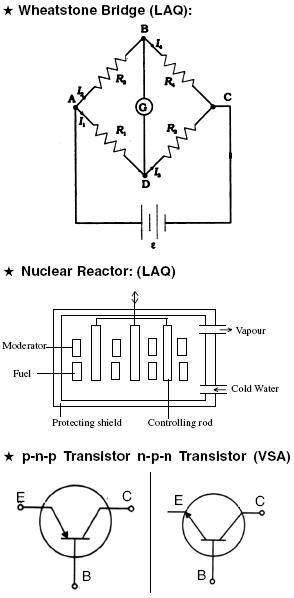
Senior Inter Physics to the IPE examinations. The diagram based
questions are frequently asked in long answer questions.
Senior Inter Physics Marks Weightage for All Chapters in IPE Exams

also combinedly. E = mc2 is a famous equation of Einstein which
encompasses whole Physics. The physics syllabus of the Senior
Intermediate, mainly deals with different forms of Energy viz. Sound,
Light, Magnetism and Electricity. We also study Modern
Physics which could not be explained by classical Physics.
Senior Inter Physics Important Questions and Exam Tips
Read the text: Guides and other printed material assist you in scoring
good marks in Intermediate Public Exam but not in getting a good rank
in Entrance exam.
Hence, read the text book thoroughly.
Physics plays a pivotal role in Medical and Engineering entrances.
Especially, in medicine, Physics decides the rank. Solve the problems
given in the Telugu
Akademi and in other standard books. Resort to model papers only after attaining
the command over the subject. To excel well in IIT and in other national level
exams, one should have the comprehensive mastery over the subject.
In Physics, every part of the subject is an important one. Revise the
topics and formulae of first year.
Some Important Questions (SAQ)
1. Critical angle, Total internal reflection, Mirages, Rainbow.
2. Scattering of Light, Colour of the Sun.
3. Simple microscope.
4. Doppler effect in light, Red-Blue shifts.
5. Coulomb's inverse square law, Dipole, Gauss's law and their applications.
6. Electric Potential, Expression for the capacitance of a parallel
plate capacitor,
Dielectrics, Energy stored by a capacitor, Series and Parallel combinations of
Capacitors.
7. Biot-Savart law, Ampere's law, Magnetic induction due to a long
current carrying conductor.
8. Cyclotron, force acting between the two parallel current carrying conductors.
9. Thomson, Rutherford, Bohr atomic models, expression for the energy
of an electron revolving around the nucleus, Debroglie's explanation
of Bohr's postulate.
10. Half-wave, Full-wave rectifiers, different types of logic gates
and their truth tables. Strategy...
Previous question papers may help you in assessing your level of
preparedness to face the Exam. Read all sorts of questions given at
the end of the chapter. Sometimes, LAQ may be asked as a SAQ and
vice-versa. . The analysis of previous question papers indicate that
all the LAQ asked under 6th chapter are framed from the SAQ of the
text book.
Long Answer Questions of Electrostatic Potential and Capacitance are given as
Short Answer Questions, such as the combination of capacitor, energy stored by a
capacitor.
The strong hold on this subject will, definitely, be helpful in
understanding other subjects in a different aspect.
good marks in Intermediate Public Exam but not in getting a good rank
in Entrance exam.
Hence, read the text book thoroughly.
Physics plays a pivotal role in Medical and Engineering entrances.
Especially, in medicine, Physics decides the rank. Solve the problems
given in the Telugu
Akademi and in other standard books. Resort to model papers only after attaining
the command over the subject. To excel well in IIT and in other national level
exams, one should have the comprehensive mastery over the subject.
In Physics, every part of the subject is an important one. Revise the
topics and formulae of first year.
Some Important Questions (SAQ)
1. Critical angle, Total internal reflection, Mirages, Rainbow.
2. Scattering of Light, Colour of the Sun.
3. Simple microscope.
4. Doppler effect in light, Red-Blue shifts.
5. Coulomb's inverse square law, Dipole, Gauss's law and their applications.
6. Electric Potential, Expression for the capacitance of a parallel
plate capacitor,
Dielectrics, Energy stored by a capacitor, Series and Parallel combinations of
Capacitors.
7. Biot-Savart law, Ampere's law, Magnetic induction due to a long
current carrying conductor.
8. Cyclotron, force acting between the two parallel current carrying conductors.
9. Thomson, Rutherford, Bohr atomic models, expression for the energy
of an electron revolving around the nucleus, Debroglie's explanation
of Bohr's postulate.
10. Half-wave, Full-wave rectifiers, different types of logic gates
and their truth tables. Strategy...
Previous question papers may help you in assessing your level of
preparedness to face the Exam. Read all sorts of questions given at
the end of the chapter. Sometimes, LAQ may be asked as a SAQ and
vice-versa. . The analysis of previous question papers indicate that
all the LAQ asked under 6th chapter are framed from the SAQ of the
text book.
Long Answer Questions of Electrostatic Potential and Capacitance are given as
Short Answer Questions, such as the combination of capacitor, energy stored by a
capacitor.
The strong hold on this subject will, definitely, be helpful in
understanding other subjects in a different aspect.
Senior Inter Study Plan Physics for AP and Telangana Boards
The new horizons of Physics which advanced into the modern way of life,
such as Electromagnetic Waves, Dual nature of matter and their
consequences are also discussed in Intermediate.
Exam Pattern: The Senior Intermediate question paper is similar to
that of Junior
Inter. First section consists of 10 Very Short Answer Questions.
Unless we answer all these questions, we can't score 60 out of 60
marks. Among these, a question may be based on a numerical problem, a
question may be a diagram to test the drawing skills of the student.
Second section consists of 8 Short Answer Questions out of which 6 are
to be answered. This section may contain a numerical problem and a
derivation.
Third section consists 3 Long Answer Questions out of which two are to
be attempted. Question may consist a definition, a derivation, a
numerical and a diagram.
Syllabus:
Senior Inter text consists of sixteen chapters. Out of these a few are
very important. In view of Intermediate Public Exam 11th, 12th, 13th,
and 16th chapters
are of meagre importance.
First chapter ''Waves" deals with Wave motion and Sound. There is a
maximum probability of getting one long answer question from this
chapter. Concentrate on
Standing Waves, Doppler effect. A numerical problem may be framed from
Beats, Organ pipes and Doppler effect.
2nd and 3rd chapters are related to Light. We can expect atleast two
Short Answer
Questions from this part of the syllabus.
Total internal reflection, optical fibre, scattering of light,
formation of a rainbow, optical instruments are the important topics
of 2nd chapter.
3rd chapter deals with the wave nature of the Light. Read the concepts
of Interference, Diffraction and Polarization peripherally.
4th, 5th & 6th chapters are to be studied as a whole. These chapters
deal with Electricity. The proper order to study these chapters is...
Electric charge, Coulomlb's law, Electric field, Gauss's law,
Potential, Capacitance, Ohm's law, Kirchoff's rules, Wheatstone
Bridge, Meter Bridge and Potentiometer.
There may be a Long Answer Question on Wheatstone Bridge
or on Potentiometer.
7th, 8th, and 9th are to be studied as a single topic. They deal with
moving charges, magnetism and Electromagnetic Induction. . 13th and
14th chapters deal with atoms and Nuclei. Atomic structure, spectra
are the main features of "Atoms". From 14th chapter, there can be a
Long Answer Question on Nuclear reactor, or on radioactivity.
10th, 11th, 12th, and 16th chapters are to be studied conceptually,
without going into the derivative part.
15th chapter deals with Electronics. Try to analyse the types of Semiconductors,
Formation and Functioning of a p-n Junction Diode. Rectification,
Transistor circuit diagram and Logic gates are the important topics of
this chapter.
Prepare a chart of important formulae and write your own notes on
different topics.
. Practice few diagrams in a lucid way as given in this article.
such as Electromagnetic Waves, Dual nature of matter and their
consequences are also discussed in Intermediate.
Exam Pattern: The Senior Intermediate question paper is similar to
that of Junior
Inter. First section consists of 10 Very Short Answer Questions.
Unless we answer all these questions, we can't score 60 out of 60
marks. Among these, a question may be based on a numerical problem, a
question may be a diagram to test the drawing skills of the student.
Second section consists of 8 Short Answer Questions out of which 6 are
to be answered. This section may contain a numerical problem and a
derivation.
Third section consists 3 Long Answer Questions out of which two are to
be attempted. Question may consist a definition, a derivation, a
numerical and a diagram.
Syllabus:
Senior Inter text consists of sixteen chapters. Out of these a few are
very important. In view of Intermediate Public Exam 11th, 12th, 13th,
and 16th chapters
are of meagre importance.
First chapter ''Waves" deals with Wave motion and Sound. There is a
maximum probability of getting one long answer question from this
chapter. Concentrate on
Standing Waves, Doppler effect. A numerical problem may be framed from
Beats, Organ pipes and Doppler effect.
2nd and 3rd chapters are related to Light. We can expect atleast two
Short Answer
Questions from this part of the syllabus.
Total internal reflection, optical fibre, scattering of light,
formation of a rainbow, optical instruments are the important topics
of 2nd chapter.
3rd chapter deals with the wave nature of the Light. Read the concepts
of Interference, Diffraction and Polarization peripherally.
4th, 5th & 6th chapters are to be studied as a whole. These chapters
deal with Electricity. The proper order to study these chapters is...
Electric charge, Coulomlb's law, Electric field, Gauss's law,
Potential, Capacitance, Ohm's law, Kirchoff's rules, Wheatstone
Bridge, Meter Bridge and Potentiometer.
There may be a Long Answer Question on Wheatstone Bridge
or on Potentiometer.
7th, 8th, and 9th are to be studied as a single topic. They deal with
moving charges, magnetism and Electromagnetic Induction. . 13th and
14th chapters deal with atoms and Nuclei. Atomic structure, spectra
are the main features of "Atoms". From 14th chapter, there can be a
Long Answer Question on Nuclear reactor, or on radioactivity.
10th, 11th, 12th, and 16th chapters are to be studied conceptually,
without going into the derivative part.
15th chapter deals with Electronics. Try to analyse the types of Semiconductors,
Formation and Functioning of a p-n Junction Diode. Rectification,
Transistor circuit diagram and Logic gates are the important topics of
this chapter.
Prepare a chart of important formulae and write your own notes on
different topics.
. Practice few diagrams in a lucid way as given in this article.
PJTSAU Second and Final Combined Counseling for UG Courses - 2015
Professor Jayashankar Telangana State Agricultural University has
announced UG counseling schedule to be held from 18 September 2015 to
19 September 2015.
The Second and Final Combined counseling for admission into Bi.P.C.
Stream Courses of B.V.Sc. and A.H./ B.Sc.(Agriculture ) / B.Sc. (Hons)
Horticulture/ B.Tech (Food Technology)/ B.Sc. (CA and BM)/ BFSc
Courses in Professor Jayashankar Telangana State Agricultural
University, Sri P.V. Narsimha Rao Telangana State University for
Veterinary, Animal & Fishery Sciences and Sri Konda Laxman Telangana
State Horticultural University for the Academic Year 2015-16 will be
held as per the schedule.
Venue: University Auditorium, Professor Jayashankar Telangana State
Agricultural University, Rajendranagar, Hyderabad.
Admissions will be based on their Telangana State EAMCET-2015 Ranks.
Counseling dates: 18th and 19th September 2015
announced UG counseling schedule to be held from 18 September 2015 to
19 September 2015.
The Second and Final Combined counseling for admission into Bi.P.C.
Stream Courses of B.V.Sc. and A.H./ B.Sc.(Agriculture ) / B.Sc. (Hons)
Horticulture/ B.Tech (Food Technology)/ B.Sc. (CA and BM)/ BFSc
Courses in Professor Jayashankar Telangana State Agricultural
University, Sri P.V. Narsimha Rao Telangana State University for
Veterinary, Animal & Fishery Sciences and Sri Konda Laxman Telangana
State Horticultural University for the Academic Year 2015-16 will be
held as per the schedule.
Venue: University Auditorium, Professor Jayashankar Telangana State
Agricultural University, Rajendranagar, Hyderabad.
Admissions will be based on their Telangana State EAMCET-2015 Ranks.
Counseling dates: 18th and 19th September 2015
Nagarjuna University Distance Education Admissions 2015-16
Center for Distance Education, Acharya Nagarjuna University, Nagarjuna Nagar, Guntur (Andhra Pradesh) has issued admission notification for various programmes to be offered through distance mode of education for the academic year 2015-16.
1) MBA, MCA, Degree courses (Through entrance exam)
2) Direct Admission in UG / PG / Diploma and Certificate Programs
Spot admissions also will be conducted for the candidates who comes with original certificates. The application forms can obtained from ANU office / study centers or can be downloaded from the website at www.anucde.info .
Last date for the submission of applications:
1) M.Sc courses: 30 November 2015
2) MA, M.Sc Maths, M.Com, MHRM, BLiSc, MLiSc, UG, PG, PG Diploma, Certificate Courses: 14 December 2015
3) BA, B.Com, B.Sc, BHM, BBA, MBA: 26 September 2015.
1) MBA, MCA, Degree courses (Through entrance exam)
2) Direct Admission in UG / PG / Diploma and Certificate Programs
Spot admissions also will be conducted for the candidates who comes with original certificates. The application forms can obtained from ANU office / study centers or can be downloaded from the website at www.anucde.info .
Last date for the submission of applications:
1) M.Sc courses: 30 November 2015
2) MA, M.Sc Maths, M.Com, MHRM, BLiSc, MLiSc, UG, PG, PG Diploma, Certificate Courses: 14 December 2015
3) BA, B.Com, B.Sc, BHM, BBA, MBA: 26 September 2015.
TTD Sri Venkateswara Vidyadana Trust Scholarships 2015-16
Sri Venkateswara Vidyadana Trust, owned by Tirumala Tirupati
Devasthanams (TTD) has issued notification for the grant of
scholarships for 10th class passed students of Andhra Pradesh for the
year 2015-16.
The students should have secured at least 500 or more marks in SSC /
10th Class examinations. Students should have studied in Govt / Aided
/ Recognised schools in Andhra Pradesh.
Candidates should secure prescribed marks in Intermediate and further
courses to get scholarships for higher courses till Post Graduation.
Selected candidates will get Rs. 300 per month irrespective selection
for other scholarships. Candidates from AP who are studying higher
courses in other states but passed 10th class from AP are also
eligible.
Devasthanams (TTD) has issued notification for the grant of
scholarships for 10th class passed students of Andhra Pradesh for the
year 2015-16.
The students should have secured at least 500 or more marks in SSC /
10th Class examinations. Students should have studied in Govt / Aided
/ Recognised schools in Andhra Pradesh.
Candidates should secure prescribed marks in Intermediate and further
courses to get scholarships for higher courses till Post Graduation.
Selected candidates will get Rs. 300 per month irrespective selection
for other scholarships. Candidates from AP who are studying higher
courses in other states but passed 10th class from AP are also
eligible.
IPE Botany Preparation - Plants and Plant Ecology
Internal organisation of Plants: It deals with Tissues and Anatomy.
Read the chapter in 4 parts.
1. Types of Tissues: Characters and types of Meristematic tissues,
Functions of different types of meristems. Types of permanent tissues.
Types of simple tissues. Differences between Parenchyma, Collenchyma &
Sclerenchyma, Cell wall organisation.
Examples for different types of sclereids can be asked as Matching/
MCQ in Eamcet.
Complex tissues - Xylem and Phloem - their components and differences
and examples are necessary. Definitions about each exarch, endarch,
mesarch, radial, collateral, open, closed vascular bundles, Ray
Parenchyma, Axial
parenchyma. Prepare a short notes on tissue systems. Ask your teacher
how these tissue systems are formed.
2. Anatomy: Prepare completely labelled diagram for Root, Stem,
Leaf of dicots & monocots. Make a comparative account for root and stem for
characters - epidermis to Medulla. It gives glimpse of overall
characters. Differences between root, stem, leaf of dicots & monocots
essential. Give stress on number of layers, vascular bundles and types
of cell. Numerical problems
can be asked.
Scope: 1 LAQ, 2 Q's in Eamcet.
Plant Ecology:
It is an easy and simple chapter. It is a scoring chapter in IPE &
Eamcet. More marks with less efforts.
Learn the definitions of Ecology, Population, Community, Ecosystem,
Biomes (examples also) and Adaptation. Prepare notes on Morphological
and Anatomical characters, various types of Hydrophytes and Xerophytes
with examples. Figures are more important. Types of successions and
their differences. Take a look of figures 13.6.
Arrange them in a sequence type of question can be asked from it. Make
a notes on types of ecological services & Examples.
Scope: 1 VSAQ, 1 SAQ, 2 Q's in Eamcet.
Read the chapter in 4 parts.
1. Types of Tissues: Characters and types of Meristematic tissues,
Functions of different types of meristems. Types of permanent tissues.
Types of simple tissues. Differences between Parenchyma, Collenchyma &
Sclerenchyma, Cell wall organisation.
Examples for different types of sclereids can be asked as Matching/
MCQ in Eamcet.
Complex tissues - Xylem and Phloem - their components and differences
and examples are necessary. Definitions about each exarch, endarch,
mesarch, radial, collateral, open, closed vascular bundles, Ray
Parenchyma, Axial
parenchyma. Prepare a short notes on tissue systems. Ask your teacher
how these tissue systems are formed.
2. Anatomy: Prepare completely labelled diagram for Root, Stem,
Leaf of dicots & monocots. Make a comparative account for root and stem for
characters - epidermis to Medulla. It gives glimpse of overall
characters. Differences between root, stem, leaf of dicots & monocots
essential. Give stress on number of layers, vascular bundles and types
of cell. Numerical problems
can be asked.
Scope: 1 LAQ, 2 Q's in Eamcet.
Plant Ecology:
It is an easy and simple chapter. It is a scoring chapter in IPE &
Eamcet. More marks with less efforts.
Learn the definitions of Ecology, Population, Community, Ecosystem,
Biomes (examples also) and Adaptation. Prepare notes on Morphological
and Anatomical characters, various types of Hydrophytes and Xerophytes
with examples. Figures are more important. Types of successions and
their differences. Take a look of figures 13.6.
Arrange them in a sequence type of question can be asked from it. Make
a notes on types of ecological services & Examples.
Scope: 1 VSAQ, 1 SAQ, 2 Q's in Eamcet.
Inter First Year Botany - Cell Cycle and Cell Division Study Plan
Cell Cycle and Cell Division: Start it with Rudolf Virchow's
contribution. Make a definition for cell cycle. Prepare the difference
between Amitosis & Mitosis, Mitosis
and Meiosis.
Mitosis: Take all the examples from previous lesson where it occurs.
How many mitotic divisions occur in pollengrains, Megaspore. How many
types of Mitotic divisions are there? What is the difference between
Arithmetic and Geometric divisions? What is meant by generation/
cycle. Problems may be asked on them.
Prepare a list of changes that take place in different stages. Know
what is meant by 2C & 4C DNA.
Meioses: Types of Meiosis - information about it must be known (Zygotic meiosis,
sporic meiosis, gametic meiosis). Prepare a list of changes for
different stages. Find where chromosome divides, centromere divides,
chromosomes separate, genomes separate, chromatids separate,
condensation/ compaction of chromosomes occur.
What is the significance of Mitosis & Meiosis. Numerical problems may
be asked based on the chromosome numbers given in Table 11.1.
contribution. Make a definition for cell cycle. Prepare the difference
between Amitosis & Mitosis, Mitosis
and Meiosis.
Mitosis: Take all the examples from previous lesson where it occurs.
How many mitotic divisions occur in pollengrains, Megaspore. How many
types of Mitotic divisions are there? What is the difference between
Arithmetic and Geometric divisions? What is meant by generation/
cycle. Problems may be asked on them.
Prepare a list of changes that take place in different stages. Know
what is meant by 2C & 4C DNA.
Meioses: Types of Meiosis - information about it must be known (Zygotic meiosis,
sporic meiosis, gametic meiosis). Prepare a list of changes for
different stages. Find where chromosome divides, centromere divides,
chromosomes separate, genomes separate, chromatids separate,
condensation/ compaction of chromosomes occur.
What is the significance of Mitosis & Meiosis. Numerical problems may
be asked based on the chromosome numbers given in Table 11.1.
Intermediate Botany Preparation Plan - Biomolecules Chapter for AP and TS students
Biomolecules: It is a chapter that deals with more biochemistry,
organic chemistry than Botany. Make the chapter into 7 parts.
1. Chemical analysis: Experiment with Trichloro acetic acid,
destructive experiment. Read the lists 10.1 and 10.2. Prepare
ascending and descending order for various elements. Note that there
is name mentioned, CNR Rao. Ask your teacher about him.
2. Amino Acids: Prepare list of Amino acids you know from the text
book and their abbreviations also (Ex: gly = glycine, Ala = Alamine)
Follow the structures given in Fig 10.1.
Learn the basic structure of Amino acid. It is useful to know
Zwitterionic form and nature. Know about 'R' Group.
3. Lipids: First learn the reason why it is kept in the list of
macromolecules. But what it is actually. Fatty acids, Glycerol and
Glycerides should be known with examples and structures given in fig.
10.1
Numerical problems regarding the no. of carbons can be asked in fatty acids.
4. Proteins: Know hierarchy of structures like Primary, Secondary,
Tertiary & Quaternary structure & their significance must be learnt. A
table is given 10.5. It can be asked in matching type question.
5. Polysaccharide: More the examples we know, more easy to identify
and differentiate. Try to learn what is meant by Mono, di, tri and
Polysaccharides. Know what is Triose, Tetrose, Pentose, Hexose,
Heptose. The information we know here will be useful in Photosynthesis
& Respiration (Second Year). Know the reason-why cellulose do not
turns blue with Iodine, why chitin is more resistant.
6. Nucleic Acids: It is very brief in text book. It is not sufficient
for the student to make notes on his own. Take the help of teacher.
Get a detailed account of DNA atleast (if not RNA).
Try to know what is 1) Loop 2) Steps 3) Nucleoside and types 4)
Nucleotide and types 5) Back bone 6) Complementarity 7) Antiparallel
8) Charge and Chemical nature of DNA 9) Angle of the loop & step 10)
Purines 11) Pyrimidines and also know how hydrogen bonds, glycosidic,
ester and phosphodiester bonds are formed. What is the principle for
knowing ester/ diester bonds?
Numerical problems regarding length of DNA fragment, % of nitrogen
bases, hydrogen bonds etc can be asked. Make use of fig 10.1 also.
7. Primary and secondary Metabolites: After knowing the difference
between them read the table 10.3. A matching question or MCQ can be
asked from it.
8. Metabolic basis for living: Know what is metabolism? Metabolic
Pathway? Examples for physical and chemical/ metabolic reaction,
Anabolism and catabolism. Know what is meant by Metabolic flux,
equilibrium and non equilibrium state.
Scope: 1 VSAQ, 1 SAQ; 2 Questions in Eamcet.
organic chemistry than Botany. Make the chapter into 7 parts.
1. Chemical analysis: Experiment with Trichloro acetic acid,
destructive experiment. Read the lists 10.1 and 10.2. Prepare
ascending and descending order for various elements. Note that there
is name mentioned, CNR Rao. Ask your teacher about him.
2. Amino Acids: Prepare list of Amino acids you know from the text
book and their abbreviations also (Ex: gly = glycine, Ala = Alamine)
Follow the structures given in Fig 10.1.
Learn the basic structure of Amino acid. It is useful to know
Zwitterionic form and nature. Know about 'R' Group.
3. Lipids: First learn the reason why it is kept in the list of
macromolecules. But what it is actually. Fatty acids, Glycerol and
Glycerides should be known with examples and structures given in fig.
10.1
Numerical problems regarding the no. of carbons can be asked in fatty acids.
4. Proteins: Know hierarchy of structures like Primary, Secondary,
Tertiary & Quaternary structure & their significance must be learnt. A
table is given 10.5. It can be asked in matching type question.
5. Polysaccharide: More the examples we know, more easy to identify
and differentiate. Try to learn what is meant by Mono, di, tri and
Polysaccharides. Know what is Triose, Tetrose, Pentose, Hexose,
Heptose. The information we know here will be useful in Photosynthesis
& Respiration (Second Year). Know the reason-why cellulose do not
turns blue with Iodine, why chitin is more resistant.
6. Nucleic Acids: It is very brief in text book. It is not sufficient
for the student to make notes on his own. Take the help of teacher.
Get a detailed account of DNA atleast (if not RNA).
Try to know what is 1) Loop 2) Steps 3) Nucleoside and types 4)
Nucleotide and types 5) Back bone 6) Complementarity 7) Antiparallel
8) Charge and Chemical nature of DNA 9) Angle of the loop & step 10)
Purines 11) Pyrimidines and also know how hydrogen bonds, glycosidic,
ester and phosphodiester bonds are formed. What is the principle for
knowing ester/ diester bonds?
Numerical problems regarding length of DNA fragment, % of nitrogen
bases, hydrogen bonds etc can be asked. Make use of fig 10.1 also.
7. Primary and secondary Metabolites: After knowing the difference
between them read the table 10.3. A matching question or MCQ can be
asked from it.
8. Metabolic basis for living: Know what is metabolism? Metabolic
Pathway? Examples for physical and chemical/ metabolic reaction,
Anabolism and catabolism. Know what is meant by Metabolic flux,
equilibrium and non equilibrium state.
Scope: 1 VSAQ, 1 SAQ; 2 Questions in Eamcet.
Junior Inter Botany Study Plan - Cell - The Unit of Life Chapter
Cell - The Unit of Life: It is a fundamental chapter again for
learning Genetics, Biotechnology and Physiology. Though it is a big
chapter, the student has to learn with more patience. Differentiate
Cytology, Cell Biology, Biology, Reductionist
Biology.
Prepare a short notes from discovery of microscope, cell, living cell,
organelles and to cell theory. Prepare a list of differences between
Animal Cell, Plant Cell; Prokaryotic cell and Eukaryotic Cell. Make a
matching material from Fig. 9.1 and 9.2 of text book.
Prepare a list of naked organelles, single membrane bounded organelles, double
membrane bounded organelles and microbodies. Prepare a table with
1) Name of the discoverer
2) Structural Specialities
3) Functions for each organelle.
Prepare a separate notes for:
1) Inclusion bodies 2) Cytoskeleton 3) Cilia and flagella 4)
Centrosome 5) Nucleosome (Figures are necessary) 6) Detailed structure
and types of chromosomes.
Make use of summary, glossary and description about Scientist given
the first page of the chapter. Prepare answers for VSAQ, Exercises
given at the end.
Scope: 1 VSAQ & 1 SAQ. 2 Questions in Eamcet.
learning Genetics, Biotechnology and Physiology. Though it is a big
chapter, the student has to learn with more patience. Differentiate
Cytology, Cell Biology, Biology, Reductionist
Biology.
Prepare a short notes from discovery of microscope, cell, living cell,
organelles and to cell theory. Prepare a list of differences between
Animal Cell, Plant Cell; Prokaryotic cell and Eukaryotic Cell. Make a
matching material from Fig. 9.1 and 9.2 of text book.
Prepare a list of naked organelles, single membrane bounded organelles, double
membrane bounded organelles and microbodies. Prepare a table with
1) Name of the discoverer
2) Structural Specialities
3) Functions for each organelle.
Prepare a separate notes for:
1) Inclusion bodies 2) Cytoskeleton 3) Cilia and flagella 4)
Centrosome 5) Nucleosome (Figures are necessary) 6) Detailed structure
and types of chromosomes.
Make use of summary, glossary and description about Scientist given
the first page of the chapter. Prepare answers for VSAQ, Exercises
given at the end.
Scope: 1 VSAQ & 1 SAQ. 2 Questions in Eamcet.
Junior Inter Botany Study Plan - Taxonomy of Angiosperms Chapter
Taxonomy of Angiosperms: It is an apex chapter in Botany in Morphology
area. It is the application of all terms learned in Chapter 5. A
student/ teacher thorough with Chapter 5 only can learn/ teach this
chapter. Systematic application of terminology
learnt there in Morphology. It can be divided into 4 parts. 1)
Components of Taxonomy 2) Types of Classifications 3) Technical
description of a family 4) families prescribed.
1. Components of Taxonomy: These are 4. Each one should be studied in detail.
Nomenclature is not dealt here. Take it from Chapter 1. In the same
way details of taxons also (take from Chapter 1). Student should know
how a Botanical name is written. In taxons, one should be thorough
with hierarchial arrangement, how a series and order end with.
2. Types of classification: An introduction of Parashara and Charaka
is also necessary though it is not given in text. From there the
student goes to Theophrastus and come to APGS. More stress should be
given to Bentham and Hookers classification.
Questions in it will be asked in number ratios. Prepare a chart with -
Number of series orders, families for Polypetalae, gamopetalae,
Monochlamydae and Monocotyledon.
3. Technical Description: It is a difficult part. Actually this
chapter is given less share in Marks quota. Under this the student has
to study what is 1) Anterior side of a flower 2) Posterior side 3)
Where the odd sepal and odd petal should be present in Dicots,
Fabaceae and Monocots 4) Position of bract, bracteole 5) Floral
diagram- how to represent Sepal, Petal, Stamen & gynoecium 6) Floral
diagram 7) Floral formula 8) the characters expressed in floral
formula but not a floral diagram 9) The characters expressed in floral
diagram but not in floral
formula 10) Prepare correct floral formula and floral diagram for all
4 families-
1) Brassicaceae 2) Fabaceae 3) Solanaceae 4) Liliaceae on one sheet.
Compare them.
After that come to the description of each family. After reading each
family prepare a list of important plants with scientific names. It is
highly essential. One question will be definitely asked in IPE and
Eamcet. Their economic use also should be studied simultaneously. .
Prepare a comparative account of 4 families for Flower, Pollination,
Fruit and Seed. Prepare a list for ascending/ descending order for 1)
Perianth members 2) Stamen 3) Carpels 4) Floral leaves based on
number.
There is a lot of work for the student and teacher. This is chapter
carries 4 marks (1 SAQ) in IPE, 3 marks in entrance exam and 6 marks
in practicals.
area. It is the application of all terms learned in Chapter 5. A
student/ teacher thorough with Chapter 5 only can learn/ teach this
chapter. Systematic application of terminology
learnt there in Morphology. It can be divided into 4 parts. 1)
Components of Taxonomy 2) Types of Classifications 3) Technical
description of a family 4) families prescribed.
1. Components of Taxonomy: These are 4. Each one should be studied in detail.
Nomenclature is not dealt here. Take it from Chapter 1. In the same
way details of taxons also (take from Chapter 1). Student should know
how a Botanical name is written. In taxons, one should be thorough
with hierarchial arrangement, how a series and order end with.
2. Types of classification: An introduction of Parashara and Charaka
is also necessary though it is not given in text. From there the
student goes to Theophrastus and come to APGS. More stress should be
given to Bentham and Hookers classification.
Questions in it will be asked in number ratios. Prepare a chart with -
Number of series orders, families for Polypetalae, gamopetalae,
Monochlamydae and Monocotyledon.
3. Technical Description: It is a difficult part. Actually this
chapter is given less share in Marks quota. Under this the student has
to study what is 1) Anterior side of a flower 2) Posterior side 3)
Where the odd sepal and odd petal should be present in Dicots,
Fabaceae and Monocots 4) Position of bract, bracteole 5) Floral
diagram- how to represent Sepal, Petal, Stamen & gynoecium 6) Floral
diagram 7) Floral formula 8) the characters expressed in floral
formula but not a floral diagram 9) The characters expressed in floral
diagram but not in floral
formula 10) Prepare correct floral formula and floral diagram for all
4 families-
1) Brassicaceae 2) Fabaceae 3) Solanaceae 4) Liliaceae on one sheet.
Compare them.
After that come to the description of each family. After reading each
family prepare a list of important plants with scientific names. It is
highly essential. One question will be definitely asked in IPE and
Eamcet. Their economic use also should be studied simultaneously. .
Prepare a comparative account of 4 families for Flower, Pollination,
Fruit and Seed. Prepare a list for ascending/ descending order for 1)
Perianth members 2) Stamen 3) Carpels 4) Floral leaves based on
number.
There is a lot of work for the student and teacher. This is chapter
carries 4 marks (1 SAQ) in IPE, 3 marks in entrance exam and 6 marks
in practicals.
Ph.D. Admissions in The University of Hyderabad 2015
University of Hyderabad, Hyderabad is inviting applications from eligible candidates for admissions into Ph.D programmes for the October, 2015 through written test. Candidates who have Awardees of JRF / ICMR/ ICAR / RGNF / NBHM / DBT / MANF / DST INSPIRE are exception from the written test.
Candidates who have a valid GATE score is eligible to apply for Ph.D. Electronics Science. Ph.D programmes are offered in the subject of Applied Mathematics, Statistics, Physics, Electronics Science, Chemistry, Biochemistry, Plant Sciences, Animal Sciences, Biotechnology, Philosophy, Applied Linguistics, Translation Studies, Sociology, Science, Technology and Society Studies, Management Studies, Medical Science, Earth and Space Sciences and Gender Studies
The application fee should be paid in the form of Demand Draft drawn in favour of the Finance Officer, University of Hyderabad and payable at State Bank of India, HU Campus Branch or at Andhra Bank, Nampally Branch (Hyderabad). Last date for receipt of filled in application form is 15th September, 2015.
Candidates who have a valid GATE score is eligible to apply for Ph.D. Electronics Science. Ph.D programmes are offered in the subject of Applied Mathematics, Statistics, Physics, Electronics Science, Chemistry, Biochemistry, Plant Sciences, Animal Sciences, Biotechnology, Philosophy, Applied Linguistics, Translation Studies, Sociology, Science, Technology and Society Studies, Management Studies, Medical Science, Earth and Space Sciences and Gender Studies
The application fee should be paid in the form of Demand Draft drawn in favour of the Finance Officer, University of Hyderabad and payable at State Bank of India, HU Campus Branch or at Andhra Bank, Nampally Branch (Hyderabad). Last date for receipt of filled in application form is 15th September, 2015.
E-Pass Fee Reimbursement Applications for 2015-16 from November
The application process for e-Pass scholarships / fee reimbursement for the academic year 2015-16 will commence from November 2015. The SC, ST, OBC and Minority students can apply for post matric scholarships from November 2015.
The applications process for the academic year 2014-15 will close by 20th of September 2015. The payments process for these candidates also will be completed by the end of October.
New applications will be accepted from November 2015. The fee reimbursement process for 2014-15 has been delayed due to technical reasons.
About 50 percent of scholarships have been released for the academic year 2014-15. Remaining 50 percent will be disbursed by 15th October 2015 after the scrutiny of the applications.
The applications process for the academic year 2014-15 will close by 20th of September 2015. The payments process for these candidates also will be completed by the end of October.
New applications will be accepted from November 2015. The fee reimbursement process for 2014-15 has been delayed due to technical reasons.
About 50 percent of scholarships have been released for the academic year 2014-15. Remaining 50 percent will be disbursed by 15th October 2015 after the scrutiny of the applications.
JNTUH and AIT Bangkok Integrated Programs Admissions 2015-16
Jawaharlal Nehru Technological University (JNTU) Hyderabad (Telangana) has issued admission notification for International Integrated Collaborated Programs in Engineering in association with various institutions. Following are details:
JNTUH and Asian Institute of Technology (AIT), Bangkok, Thailand are offering following programs for the academic year 2015-16.
B.Tech Civil Engineering: 20 seats
B.Tech EEE: 20 seats
B.Tech ECE: 10 seats
B.Tech CSE: 10 seats.
The 3 1/2 years study of the course will be in JNTUH and 1 1/2 years course will be conducted at AIT for MS with various specializations. Last date for the receipt of applications is 18th September 2015. For more details, see www.jntuh.ac.in .
JNTUH and Asian Institute of Technology (AIT), Bangkok, Thailand are offering following programs for the academic year 2015-16.
B.Tech Civil Engineering: 20 seats
B.Tech EEE: 20 seats
B.Tech ECE: 10 seats
B.Tech CSE: 10 seats.
The 3 1/2 years study of the course will be in JNTUH and 1 1/2 years course will be conducted at AIT for MS with various specializations. Last date for the receipt of applications is 18th September 2015. For more details, see www.jntuh.ac.in .
Telangana 10th Class Half Yearly Examinations Dates 2015-16
The Department of School Education, Government of Telangana has informed that the half yearly examinations for 1st class to 10th class students in the state will be conducted from 3rd October 2015.
The half yearly examinations will be held from 3rd to 9th October 2015 for all the classes from 1st to 10th Class of state board schools. The detailed examination schedule will be sent to respective schools.
There will be separate examination schedule for Andhra Pradesh schools as the Boards of School Education are divided and the states are following different examination pattern for 10th Class public examinations.
Students have to consider the half yearly examinations as serious as final examinations as most of the syllabus will be completed by that time in the schools. Question papers also prepared considering all the syllabus.
The half yearly examinations will be held from 3rd to 9th October 2015 for all the classes from 1st to 10th Class of state board schools. The detailed examination schedule will be sent to respective schools.
There will be separate examination schedule for Andhra Pradesh schools as the Boards of School Education are divided and the states are following different examination pattern for 10th Class public examinations.
Students have to consider the half yearly examinations as serious as final examinations as most of the syllabus will be completed by that time in the schools. Question papers also prepared considering all the syllabus.
AP DEECET 2015 Results and Counseling Schedule
The Department of School Education, Government of Andhra Pradesh
(DSEAP) will release the results of AP - DEECET 2015 on 8th September
2015. The results of DEECET / AP DIETCET 2015 can be obtained from the
official website deecetap dot cgg dot gov dot in .
The counseling schedule also will be released along with the results
of AP DEECET 2015. The counseling is likely to be held in October
first week. The detailed schedule also will be displayed on the
website.
AP - DEECET is for admission into D.Ed course in Government and
Private DIET colleges in Andhra Pradesh for the academic year 2015-16.
The duration of the course is two years.
The candidates who have completed D.Ed course will be eligible for the
posts of SGTs (Secondary Grade Teachers) in Andhra Pradesh. The SGT
posts will be filled with D.Ed passed candidates only as per the
Supreme Court guidelines.
(DSEAP) will release the results of AP - DEECET 2015 on 8th September
2015. The results of DEECET / AP DIETCET 2015 can be obtained from the
official website deecetap dot cgg dot gov dot in .
The counseling schedule also will be released along with the results
of AP DEECET 2015. The counseling is likely to be held in October
first week. The detailed schedule also will be displayed on the
website.
AP - DEECET is for admission into D.Ed course in Government and
Private DIET colleges in Andhra Pradesh for the academic year 2015-16.
The duration of the course is two years.
The candidates who have completed D.Ed course will be eligible for the
posts of SGTs (Secondary Grade Teachers) in Andhra Pradesh. The SGT
posts will be filled with D.Ed passed candidates only as per the
Supreme Court guidelines.
Senior Inter Chemistry Important Topics - Alkanes, Organic Compounds and Chemistry in Everyday Life
Chemistry In Everyday Life: Expect two 2 marks questions in I.P.E.
Definitions and 2 examples of antacids, antihistamines, antiseptics,
antibiotics, analgesics (narcotic & non-narcotic), tranquilizers,
antifertility
drugs, artificial sweetening agents, food preservatives, antioxidents
in food, difference between soap & detergent, constituents of dettol.
But there is a possibility of 4 marks question structures of
Serotonin, bithionol, Saccharin and Chloramphenicol.
For objective exams: Practice and remember the structures and the main
parts of structures of drugs and other molecules, examples of all the
drugs,
artificial sweetening agents, food preservatives.
Halo Alkanes and Halo Arenes:
Be perfect with IUPAC nomenclature and other fundamentals of 1st year
Organic Chemistry in order to strengthen in 2nd year Organic
Chemistry. Named reactions, conversions, IUPAC names of the compounds
are very important. One 4 marks or two 2 marks questions will be given
in I.P.E. exam.
4 Marks: SN1 and SN2 mechanisms and application oriented questions. In
box: 11.1 and 11.2. Chapter end questions: 12, 13, 20, 21.
2 Marks: In box: 11.5 to 11.7 and 11.9. In text: 11.5 to 11.8. Chapter
end: 1 to 11, any bit from 17, 19, 26, 31, 32 and all named reactions.
For objective exams: SN1, SN2 based questions, conversions, all named
reactions.
Organic Compounds Containing C, H, O:
6 Marks (2M + 4M) or 8 Marks (4 named reactions x 2 M = 8 M) questions
are coming in I.P.E. Better to prepare own notes for preparation and
properties of alcohols, phenols, ethers, aldehydes, ketones,
carboxylic acids separately.
From alcohols, phenols, ethers: 2 Marks: In box: 12.1 to 12.7. In
text: 12.1, 12.3, 12.5 to 12.9. Chapter end: 1 to 10, 12, 13
4 Marks: Chapter end questions: 15, 16, 21, 22. . 8 Marks: All named
reactions like Reimertieman, Kolbe's, esterification, Williamson's,
Aldol condensation and crossed aldol condensation.
From aldehydes, Ketones, Carboxylic acids: 2 Marks: In box: 12.8,
12.9, 12.12. In text: 12.14, 12.15, 12.16, 12.18, 12.20. Chapter end:
1b, 3, 10, 11, 12. H.V.Z. Cannizzaro, Rosenmund.
4 Marks: 15, 22, 24. For objective exams: Comparison of b.p.s,
acidic nature, different ethers reactions with HI or RX, Iodoform,
Aldol, Cross aldol condensation reactions.
Organic Compounds Containing N:
Most of the times one 2 marks and one 4 marks questions are given in
previous I.P.E.
2 Marks: Sandmeyer's reaction, Gattermann reaction. In box: 13.2 & 13.4.
In text: 13.2, 13.3, 13.4 13.8 13.9. Chapter end: 1 to 10.
4 Marks: Chapter end questions 11, 15, 23, 27, 31a, 34.
For objective exams: Comparison basic nature of the compounds,
conversions, named reactions. Prepare a flow chart of all the
conversions in Organic Chemistry. Go through previous 10 years JEE
mains question papers.
Definitions and 2 examples of antacids, antihistamines, antiseptics,
antibiotics, analgesics (narcotic & non-narcotic), tranquilizers,
antifertility
drugs, artificial sweetening agents, food preservatives, antioxidents
in food, difference between soap & detergent, constituents of dettol.
But there is a possibility of 4 marks question structures of
Serotonin, bithionol, Saccharin and Chloramphenicol.
For objective exams: Practice and remember the structures and the main
parts of structures of drugs and other molecules, examples of all the
drugs,
artificial sweetening agents, food preservatives.
Halo Alkanes and Halo Arenes:
Be perfect with IUPAC nomenclature and other fundamentals of 1st year
Organic Chemistry in order to strengthen in 2nd year Organic
Chemistry. Named reactions, conversions, IUPAC names of the compounds
are very important. One 4 marks or two 2 marks questions will be given
in I.P.E. exam.
4 Marks: SN1 and SN2 mechanisms and application oriented questions. In
box: 11.1 and 11.2. Chapter end questions: 12, 13, 20, 21.
2 Marks: In box: 11.5 to 11.7 and 11.9. In text: 11.5 to 11.8. Chapter
end: 1 to 11, any bit from 17, 19, 26, 31, 32 and all named reactions.
For objective exams: SN1, SN2 based questions, conversions, all named
reactions.
Organic Compounds Containing C, H, O:
6 Marks (2M + 4M) or 8 Marks (4 named reactions x 2 M = 8 M) questions
are coming in I.P.E. Better to prepare own notes for preparation and
properties of alcohols, phenols, ethers, aldehydes, ketones,
carboxylic acids separately.
From alcohols, phenols, ethers: 2 Marks: In box: 12.1 to 12.7. In
text: 12.1, 12.3, 12.5 to 12.9. Chapter end: 1 to 10, 12, 13
4 Marks: Chapter end questions: 15, 16, 21, 22. . 8 Marks: All named
reactions like Reimertieman, Kolbe's, esterification, Williamson's,
Aldol condensation and crossed aldol condensation.
From aldehydes, Ketones, Carboxylic acids: 2 Marks: In box: 12.8,
12.9, 12.12. In text: 12.14, 12.15, 12.16, 12.18, 12.20. Chapter end:
1b, 3, 10, 11, 12. H.V.Z. Cannizzaro, Rosenmund.
4 Marks: 15, 22, 24. For objective exams: Comparison of b.p.s,
acidic nature, different ethers reactions with HI or RX, Iodoform,
Aldol, Cross aldol condensation reactions.
Organic Compounds Containing N:
Most of the times one 2 marks and one 4 marks questions are given in
previous I.P.E.
2 Marks: Sandmeyer's reaction, Gattermann reaction. In box: 13.2 & 13.4.
In text: 13.2, 13.3, 13.4 13.8 13.9. Chapter end: 1 to 10.
4 Marks: Chapter end questions 11, 15, 23, 27, 31a, 34.
For objective exams: Comparison basic nature of the compounds,
conversions, named reactions. Prepare a flow chart of all the
conversions in Organic Chemistry. Go through previous 10 years JEE
mains question papers.
Inter 2nd Year Chemistry Study Plan - Elements, Polymers and Biomolecules
P - Block Elements: Mostly two 2 marks (Group 15 or 16 or 17), two 4
marks (group 16 or 17 or 18) are coming from this lesson. This chapter
has a weightage of 12 marks. 2 Marks: From 15th group: Chapter end
questions No: 3, 5, 6, 18, 19, 21, 28, 31, 39, 45. In box: 6.2, 6.4,
6.5, 6.7, 6.9. In text: 6.2, 6.5, 6.10.
From 16th group: Chapter end questions: 2, 7, 8, 12, 14, 15, 17, 19,
22, 27, 28, 40. In Box: 6.11, 6.12. In text: 6.15, 6.25.
From 17th group: Chapter end Questions No: 6, 5, 9, 10, 11, 17, 19,
20, 25, 31, 32. In box: 6.15, 6.16, 6.17, 6.18
4 Marks: 15th group: NH3 by Haber's process, HNO3 by Ostwald's process.
16th group: H2SO4 by contact process, O3 preparation and reactions
with Pbs, C2H4, KI, Hg and Ag.
17th group: Cl2 preparation 2 methods or reactions of Cl2 with Cold
dil. NaOH, hot conc. NaOH, Na2S2O3, excess of NH3.
18th group: Preparation, structures of XeF2, XeF4, XeF6, XeO3, XeOF4.
8 Marks: There is a possibility of asking preparation and properties
of Cl2 or O3 . For objective exams: oxyacids of S, Cl, Hydrides,
Hybridization of molecules.
d and f Block Elements and Coordination Compounds:
Expect one 2 marks question and one 4 marks question in I.P.E. from this lesson.
2 Marks: In box: 7.1, 7.8, 7.12, 7.13. In text: 7.3, 7.10, 7.11, 7.12,
7.13. Chapter end questions: 8, 30, 32, 34, 35, 47, 51, 52, 53, 55,
57, 58, 62.
4 Marks:Werner's theory with suitable examples, IUPAC names of complex
compounds are most repeated questions. Other questions to be learned
are: Lanthanide contraction and its consequences, Linkage,
Co-ordination, Ionisation, Hydrate isomerisms with examples, 4
applications of co-ordination compounds, 4 characteristic properties
of transition
elements, examples. In box: 7.12, 7.13. In text: 7.11, 7.12, 7.13, 7.16, 7.18.
For objective exams: Werner's theory applications, no. of electrons in
the ions (It is must to learn atomic numbers from 21 to 30, their
names, oxidation states, their electronic configuration), Magnetic
moment, interstitial compounds, standard reduction potential linked
questions, ionic size, oxidation states of f-block elements, bonding
types (V.B.T.), hybridization, isomerism, IUPAC nomenclature and
crystal field theory.
Polymers:
Everytime two 2 marks questions are coming in I.P.E. from this lesson.
It is advisable to prepare for I.P.E. and entrance exams at a time.
For this purpose prepare a chart for name of polymer, type of
classification based on mode of polymerisation, names of the monomers
(& their structures) present in the polymers, functional group in the
polymer, examples, uses.
2 Marks: PHBV definition and uses, PDI, Vulcanization, Names of the
monomers present in Teflon, Bakelite, Nylon-2-Nylon-6, Nylon 66, Nylon
6, Dacron, Neoprene, PVC, Buna-N, Buna-S, definitions with 2 examples
of fibres, elastomers, copolymers, polymerisation, condensation &
addition polymerisation, Thermoplastic and thermosetting polymers.
Biomolecules:
One can expect one 4 marks question or two 2 marks questions from this
lesson for I.P.E.
2 Marks: Anomers, invert sugar, essential and non essential amino
acids, Zwitter ion, Monosaccharides, glycosidic linkage, peptide bond,
nucleic acids, nucleoside, nucleotide definitions with 2 examples,
enzymes, denaturation.
4 Marks: A, D, E, K vitamins (Sources and deficiency diseases),
Hormones (types, examples & functions), structure of glucose.
For objective exams: Hydrolysis productions of disaccharides, types of
vitamins (sources, deficiency diseases), structural aspects of
disaccharides, DNA, RNA, functions of hormones.
marks (group 16 or 17 or 18) are coming from this lesson. This chapter
has a weightage of 12 marks. 2 Marks: From 15th group: Chapter end
questions No: 3, 5, 6, 18, 19, 21, 28, 31, 39, 45. In box: 6.2, 6.4,
6.5, 6.7, 6.9. In text: 6.2, 6.5, 6.10.
From 16th group: Chapter end questions: 2, 7, 8, 12, 14, 15, 17, 19,
22, 27, 28, 40. In Box: 6.11, 6.12. In text: 6.15, 6.25.
From 17th group: Chapter end Questions No: 6, 5, 9, 10, 11, 17, 19,
20, 25, 31, 32. In box: 6.15, 6.16, 6.17, 6.18
4 Marks: 15th group: NH3 by Haber's process, HNO3 by Ostwald's process.
16th group: H2SO4 by contact process, O3 preparation and reactions
with Pbs, C2H4, KI, Hg and Ag.
17th group: Cl2 preparation 2 methods or reactions of Cl2 with Cold
dil. NaOH, hot conc. NaOH, Na2S2O3, excess of NH3.
18th group: Preparation, structures of XeF2, XeF4, XeF6, XeO3, XeOF4.
8 Marks: There is a possibility of asking preparation and properties
of Cl2 or O3 . For objective exams: oxyacids of S, Cl, Hydrides,
Hybridization of molecules.
d and f Block Elements and Coordination Compounds:
Expect one 2 marks question and one 4 marks question in I.P.E. from this lesson.
2 Marks: In box: 7.1, 7.8, 7.12, 7.13. In text: 7.3, 7.10, 7.11, 7.12,
7.13. Chapter end questions: 8, 30, 32, 34, 35, 47, 51, 52, 53, 55,
57, 58, 62.
4 Marks:Werner's theory with suitable examples, IUPAC names of complex
compounds are most repeated questions. Other questions to be learned
are: Lanthanide contraction and its consequences, Linkage,
Co-ordination, Ionisation, Hydrate isomerisms with examples, 4
applications of co-ordination compounds, 4 characteristic properties
of transition
elements, examples. In box: 7.12, 7.13. In text: 7.11, 7.12, 7.13, 7.16, 7.18.
For objective exams: Werner's theory applications, no. of electrons in
the ions (It is must to learn atomic numbers from 21 to 30, their
names, oxidation states, their electronic configuration), Magnetic
moment, interstitial compounds, standard reduction potential linked
questions, ionic size, oxidation states of f-block elements, bonding
types (V.B.T.), hybridization, isomerism, IUPAC nomenclature and
crystal field theory.
Polymers:
Everytime two 2 marks questions are coming in I.P.E. from this lesson.
It is advisable to prepare for I.P.E. and entrance exams at a time.
For this purpose prepare a chart for name of polymer, type of
classification based on mode of polymerisation, names of the monomers
(& their structures) present in the polymers, functional group in the
polymer, examples, uses.
2 Marks: PHBV definition and uses, PDI, Vulcanization, Names of the
monomers present in Teflon, Bakelite, Nylon-2-Nylon-6, Nylon 66, Nylon
6, Dacron, Neoprene, PVC, Buna-N, Buna-S, definitions with 2 examples
of fibres, elastomers, copolymers, polymerisation, condensation &
addition polymerisation, Thermoplastic and thermosetting polymers.
Biomolecules:
One can expect one 4 marks question or two 2 marks questions from this
lesson for I.P.E.
2 Marks: Anomers, invert sugar, essential and non essential amino
acids, Zwitter ion, Monosaccharides, glycosidic linkage, peptide bond,
nucleic acids, nucleoside, nucleotide definitions with 2 examples,
enzymes, denaturation.
4 Marks: A, D, E, K vitamins (Sources and deficiency diseases),
Hormones (types, examples & functions), structure of glucose.
For objective exams: Hydrolysis productions of disaccharides, types of
vitamins (sources, deficiency diseases), structural aspects of
disaccharides, DNA, RNA, functions of hormones.
Senior Inter Chemistry Study Plan - Solid State, Electro Chemistry and Metallurgy Chapters
Consistency with right strategic plan is the ultimate key to success.
Purposeful planning brings the future into present. A goal without a
plan is just like a dream. Inter marks are as important as entrance
exam marks (or ranks). Have a good grip on 2nd year syllabus, as all
entrance exams will be held at the end of 2nd year.
Solid State:
Most of the times 4 marks question is given from this lesson. For 4
marks Bragg's equation (derivation & problem), calculation of
efficiency of packing in FCC, BCC and simple cubic crystals are
important. As there is possibility of giving two 2 marks questions as
one 4 marks question, it is advisable to read 2 marks questions like
Frenkel & Schottky defects, tetrahedral & octahedral voids, n-type &
p-type semi conductors, crystal lattice & unit cell, problems on
density, f-centres, doping 5 types of magnetism (definitions with
examples) and semi conductor (def.) are important.
For objective exams: 7 crystal systems table, problems on density,
Bragg's equation, packing efficiency, defects in solids,
semiconductors (n & p types) and 2 types of viods. Solutions
One 2 marks, one 4 marks questions will come from this lesson. Before
solving problems in this lesson, one must be perfect in Ist year
lesson Stoichiometry, atomic weights, molecular weights and formulae.
2 Marks: PPm, mole fraction, Henry's law, ideal & isotonic solutions,
osmotic pressure, ebullioscopic & cryoscopic constants, R.L.V.P., In
text questions: 2.2, 2.3, examples. In boxes: 2.1, 2.2. Lesson end
questions:
17, 19, 46, 49.
4 Marks: Raoult's law (def. & problem). In text questions: 2.1, 2.3,
2.5, 2.7, examples. In boxes: 2.4, 2.7, 2.8, 2.9, 2.13. Lesson end
questions: 26, 34, 40, 46, 47.
For objective exams: Van't Hoff factor, Henry's law, Raoult's law,
isotonic solutions, all colligative properties (theory & problems). 2
questions will come in EAMCET and JEE Mains.
Electro Chemistry and Chemical Kinetics:
Every year 10 marks questions (8 M + 2 M or 4 M + 4 M + 2 M) are
coming in I.P.E., 2 questions in EAMCET, 2 to 3 questions in JEE
Mains.
From Electro Chemistry: 2 Marks: In box questions: 3.1, 3.2, 3.3 to
3.7, 3.8, 3.10. In text questions: 3.6, 3.10, 3.12. Chapter end
questions: 1, 4, 5, 6, 8, 13, 14, 23, 31.
4 Marks: Faraday's laws (def. & problems), Kohlrausch's Law (def. &
problems), chapter end questions: 30, 33, 42, 48.
For objective exams: Products of Electrolysis, Lead, storage battery,
Problems on ECell, Conductivity, Kohlrausch's law, Nernst equation,
conductivities- types and ΔG.
From Kinetics: 2 Marks: Chapter end questions: 8, 12, 17, 19, 24, 31, 48, 53.
4 Marks: Order & Molecularity (def., differences, examples of 0th,
1st, 2nd order reactions).
8 Marks: Collision theory, effect of temperature and catalyst on rate
of reaction.
For objective exams: Slope, intercept, problems related to Arrhenius
equation, t1/2, t99% etc, 1st order, rate expression.
Surface Chemistry:
Most easiest topic among 2nd year chemistry lessons. One 4 marks
question is given every year in I.P.E.
4 Marks: Catalysis (definitions, types, examples), Emulsions (types),
Physical adsorption & Chemical adsorption (definition, differences,
examples), micelle & cleaning action of soap, Lyophilic & lyophobic
colloids (def. & differences).
For objective exams: Types of Colloidal systems table, gold number,
flocculation value, Hardy schulze rule, adsorption - types, isotherms
- types, auto catalysis, micelles, +ve & −ve sols examples, Brownian
movement.
General Principles of Metallurgy:
One 2 marks, one 4 marks question are coming every year from this lesson.
2 Marks: Names and formulae of ores of Al, Fe, Cu, Zn, Composition of
alloys Brass, Bronze, German Silver, Uses of Zn, Cu, Fe, Al, Cast
Iron, Wrought Iron, Nickel Steel, Stainless Steel, definitions of
Poling, flux, gangue,
matte, blister copper, slag, ore, mineral, role of depressant in Froth
flotation, role of Si in the extraction of Copper, role of Cryolite in
the
extraction of Al and Zone refining.
4 Marks: Calcination, roasting, Froth flotation, working of blast
furnace, Froth flotation and extraction of Al from Bauxite. Zn from
Zinc blends, Cu from Copper Pyrites. As whole answer for the
extraction of metals is
not given at one place, it is advised to prepare own notes for them.
For objective exams: Formulae of ores, concentration methods of ores,
extraction of metal from concentrated ore, refining methods with
reactions and examples, Zones of blast furnace and reactions,
composition of
alloys.
Purposeful planning brings the future into present. A goal without a
plan is just like a dream. Inter marks are as important as entrance
exam marks (or ranks). Have a good grip on 2nd year syllabus, as all
entrance exams will be held at the end of 2nd year.
Solid State:
Most of the times 4 marks question is given from this lesson. For 4
marks Bragg's equation (derivation & problem), calculation of
efficiency of packing in FCC, BCC and simple cubic crystals are
important. As there is possibility of giving two 2 marks questions as
one 4 marks question, it is advisable to read 2 marks questions like
Frenkel & Schottky defects, tetrahedral & octahedral voids, n-type &
p-type semi conductors, crystal lattice & unit cell, problems on
density, f-centres, doping 5 types of magnetism (definitions with
examples) and semi conductor (def.) are important.
For objective exams: 7 crystal systems table, problems on density,
Bragg's equation, packing efficiency, defects in solids,
semiconductors (n & p types) and 2 types of viods. Solutions
One 2 marks, one 4 marks questions will come from this lesson. Before
solving problems in this lesson, one must be perfect in Ist year
lesson Stoichiometry, atomic weights, molecular weights and formulae.
2 Marks: PPm, mole fraction, Henry's law, ideal & isotonic solutions,
osmotic pressure, ebullioscopic & cryoscopic constants, R.L.V.P., In
text questions: 2.2, 2.3, examples. In boxes: 2.1, 2.2. Lesson end
questions:
17, 19, 46, 49.
4 Marks: Raoult's law (def. & problem). In text questions: 2.1, 2.3,
2.5, 2.7, examples. In boxes: 2.4, 2.7, 2.8, 2.9, 2.13. Lesson end
questions: 26, 34, 40, 46, 47.
For objective exams: Van't Hoff factor, Henry's law, Raoult's law,
isotonic solutions, all colligative properties (theory & problems). 2
questions will come in EAMCET and JEE Mains.
Electro Chemistry and Chemical Kinetics:
Every year 10 marks questions (8 M + 2 M or 4 M + 4 M + 2 M) are
coming in I.P.E., 2 questions in EAMCET, 2 to 3 questions in JEE
Mains.
From Electro Chemistry: 2 Marks: In box questions: 3.1, 3.2, 3.3 to
3.7, 3.8, 3.10. In text questions: 3.6, 3.10, 3.12. Chapter end
questions: 1, 4, 5, 6, 8, 13, 14, 23, 31.
4 Marks: Faraday's laws (def. & problems), Kohlrausch's Law (def. &
problems), chapter end questions: 30, 33, 42, 48.
For objective exams: Products of Electrolysis, Lead, storage battery,
Problems on ECell, Conductivity, Kohlrausch's law, Nernst equation,
conductivities- types and ΔG.
From Kinetics: 2 Marks: Chapter end questions: 8, 12, 17, 19, 24, 31, 48, 53.
4 Marks: Order & Molecularity (def., differences, examples of 0th,
1st, 2nd order reactions).
8 Marks: Collision theory, effect of temperature and catalyst on rate
of reaction.
For objective exams: Slope, intercept, problems related to Arrhenius
equation, t1/2, t99% etc, 1st order, rate expression.
Surface Chemistry:
Most easiest topic among 2nd year chemistry lessons. One 4 marks
question is given every year in I.P.E.
4 Marks: Catalysis (definitions, types, examples), Emulsions (types),
Physical adsorption & Chemical adsorption (definition, differences,
examples), micelle & cleaning action of soap, Lyophilic & lyophobic
colloids (def. & differences).
For objective exams: Types of Colloidal systems table, gold number,
flocculation value, Hardy schulze rule, adsorption - types, isotherms
- types, auto catalysis, micelles, +ve & −ve sols examples, Brownian
movement.
General Principles of Metallurgy:
One 2 marks, one 4 marks question are coming every year from this lesson.
2 Marks: Names and formulae of ores of Al, Fe, Cu, Zn, Composition of
alloys Brass, Bronze, German Silver, Uses of Zn, Cu, Fe, Al, Cast
Iron, Wrought Iron, Nickel Steel, Stainless Steel, definitions of
Poling, flux, gangue,
matte, blister copper, slag, ore, mineral, role of depressant in Froth
flotation, role of Si in the extraction of Copper, role of Cryolite in
the
extraction of Al and Zone refining.
4 Marks: Calcination, roasting, Froth flotation, working of blast
furnace, Froth flotation and extraction of Al from Bauxite. Zn from
Zinc blends, Cu from Copper Pyrites. As whole answer for the
extraction of metals is
not given at one place, it is advised to prepare own notes for them.
For objective exams: Formulae of ores, concentration methods of ores,
extraction of metal from concentrated ore, refining methods with
reactions and examples, Zones of blast furnace and reactions,
composition of
alloys.
Senior Inter Maths Paper 2B Study Plan and Important Chapters
The 'Coordinate Geometry' unit of Paper-B consists of the chapters
'The Circle', 'System of Circles', 'Parabola', 'Ellipse', and
'Hyperbola' all theoretical in nature. 'Locus' and 'Transformation of
Axes' of first year course
are involved in these chapters.
While 'locus' is used to define these geometrical figures,
'translation of axes' is used to derive certain results like obtaining
parametric equations of a circle. 'Learn to be silent and let your
quiet mind listen and absorb' is the famous quotation best suitable in
classrooms in learning about the circle
and its various features.
It also can be noted that the foot of the perpendicular relation
studied in first year Straight Line chapter is used to find the
midpoint of the chord intercepted by a given circle and a line. Also,
section formulae are applied in studying about the relative positions
of two circles. Thus, students are
reminded to remember the fundamentals wherever and whenever studied.
The chapter 'System of Circles' introduces the concepts of (i) angle
between two intersecting circles and (ii) radical axis of two
circles.
'Law of Cosines' formula of first year properties of Triangles is used
in deriving the expression for the angle between two intersecting
circles. 'Locus' concept is used to define the radical axis of two
circles. Also,
concept of S + .L = 0, studied in straight line chapter of first year
course, is applied in solving certain problems related to radical
axis. Thus, the first year fundamentals come into use in some of the
second year chapters.
The knowledge of definitions and various derivations studied in the
chapter 'Circle' is helpful to understand about the three conics such
as Parabola, Ellipse and Hyperbola. . In the second unit calculus of
Paper - B,
'Integration', 'Definite Integrals' and 'Differential Equations' are
the chapters
involved. The concept of differentiation is recollected in learning
the concept of integration, which is regarded as the inverse process
of differentiation.
Standard forms and properties of integrals are discussed in the
chapter integration. Method of integration by parts, partial fractions
method and reduction formulae are very important features of
integration.
"Definite Integrals" chapter deals with applications of integration in
terms of deriving reduction formulae and computation of areas of
closed regions. Both are important topics as far as examinations are
concerned. Solved problems and all exercise problems must be attempted
and practised time to time. Then only students can have a grip over
the subject matter, which helps them to perform well in higher levels
of examinations.
In the chapter 'differential equations', formation and solution of
equations are learnt. Various methods exist in solving differential
equations and students must be thorough with each and every method.
Differential equations have applications in many branches of Physics,
Physical Chemistry etc. As usual, students are expected to look into
the solved examples and exercise problems for gaining perfection.
To conclude in Paper-B, Circle, Parabola, Integration, Definite Integrals and
Differential Equations are very very important chapters, carrying a
reasonable weightage of marks in the Intermediate examination. Regular
practice of the methods, remembering formulae and solving all types of
problems repeatedly in every chapter is the key to success in the
examinations.
'The Circle', 'System of Circles', 'Parabola', 'Ellipse', and
'Hyperbola' all theoretical in nature. 'Locus' and 'Transformation of
Axes' of first year course
are involved in these chapters.
While 'locus' is used to define these geometrical figures,
'translation of axes' is used to derive certain results like obtaining
parametric equations of a circle. 'Learn to be silent and let your
quiet mind listen and absorb' is the famous quotation best suitable in
classrooms in learning about the circle
and its various features.
It also can be noted that the foot of the perpendicular relation
studied in first year Straight Line chapter is used to find the
midpoint of the chord intercepted by a given circle and a line. Also,
section formulae are applied in studying about the relative positions
of two circles. Thus, students are
reminded to remember the fundamentals wherever and whenever studied.
The chapter 'System of Circles' introduces the concepts of (i) angle
between two intersecting circles and (ii) radical axis of two
circles.
'Law of Cosines' formula of first year properties of Triangles is used
in deriving the expression for the angle between two intersecting
circles. 'Locus' concept is used to define the radical axis of two
circles. Also,
concept of S + .L = 0, studied in straight line chapter of first year
course, is applied in solving certain problems related to radical
axis. Thus, the first year fundamentals come into use in some of the
second year chapters.
The knowledge of definitions and various derivations studied in the
chapter 'Circle' is helpful to understand about the three conics such
as Parabola, Ellipse and Hyperbola. . In the second unit calculus of
Paper - B,
'Integration', 'Definite Integrals' and 'Differential Equations' are
the chapters
involved. The concept of differentiation is recollected in learning
the concept of integration, which is regarded as the inverse process
of differentiation.
Standard forms and properties of integrals are discussed in the
chapter integration. Method of integration by parts, partial fractions
method and reduction formulae are very important features of
integration.
"Definite Integrals" chapter deals with applications of integration in
terms of deriving reduction formulae and computation of areas of
closed regions. Both are important topics as far as examinations are
concerned. Solved problems and all exercise problems must be attempted
and practised time to time. Then only students can have a grip over
the subject matter, which helps them to perform well in higher levels
of examinations.
In the chapter 'differential equations', formation and solution of
equations are learnt. Various methods exist in solving differential
equations and students must be thorough with each and every method.
Differential equations have applications in many branches of Physics,
Physical Chemistry etc. As usual, students are expected to look into
the solved examples and exercise problems for gaining perfection.
To conclude in Paper-B, Circle, Parabola, Integration, Definite Integrals and
Differential Equations are very very important chapters, carrying a
reasonable weightage of marks in the Intermediate examination. Regular
practice of the methods, remembering formulae and solving all types of
problems repeatedly in every chapter is the key to success in the
examinations.
Senior Inter Study Plan for Maths Paper 2A for AP and Telangana
'Permutations and Combinations' chapter mainly depends on the
principle of counting. Many problems relating to puzzles that we come
across in our daily life are solved by using the knowledge of
Permutations and Combinations. The concept of Permutations and
Combinations was treated as a self contained topic in Mathematics
under the name of ''Vikalpa" by renowned mathematician 'Mahavira' in
9th century A.D. The credit of stating several important theorems and
results on the subject matter of Permutations and Combinations goes to
the renowned
scholar ''Bhaskaracharya".
This chapter is significant in algebra as well as Probability in view
of a number of applications in day to day life. For instance, choosing
five questions out of seven questions in a question paper, choosing
required items from the menu card in a hotel, selecting a cricket team
of eleven players from out of sixteen members etc.. are based on the
principle of Permutations and Combinations only. The theory of
Probability is an extension of this chapter. Delegates occupying the
seats in a round table meeting is concerned to circular permutations.
Students must be aware of these types of practical problems and their
solutions. Students are expected to solve all the problems of all the
exercises in this chapter for gaining good marks. In competitive
entrance examinations, this chapter along with Probability chapter has
its own importance.
"Binomial theorem" is proved by using the principle of mathematical
induction, which was studied in First Year Algebra unit. Binomial
theorems for positive integral index and rational index have a number
of applications.
Binomial coefficients have many properties with which students are
expected to be perfect. Students are also advised to repeatedly
practise all the solved problems and all exercise problems. This is an
important
chapter in marks point of view. The application of binomial theorem
will be taken up in theoretical distributions in the Probability
chapter.
"Partial Fractions" and "Measures of Dispersion" are such easy
chapters that students need not put any extra effort than the required
one. It is more than sufficient if they are thorough with the methods
involved in them.
Probability
As said earlier, Probability is based on the concept of Permutations
and Combinations. It deals with the phenomenon of chance or
randomness. This chapter is extensively studied in the form of
postulates, results, theorems
and illustrations. The theory of Probability is simply the science of logic,
quantitatively treated. This is a good scoring chapter, once studied
in a proper way. In the chapters Permutations and Combinations and
Probability students are exposed to challenging problems sometimes in
competitive
examinations.
Many problems of Science as well as daily life are concerned with a
numerical value associated with the outcome of an experiment. For
example, we would like to know the probability of 10 coins showing up
8 tails when at a time tossed. To study problems of this type, the
concept of random variable is introduced. Students are expected to
know the formulae for finding mean and variance of a random variable.
Similarly knowledge of
binomial theorem and binomial coefficients is necessary to tackle the
problems of probability distributions. Marks wise, this is an easy
chapter for students.
To conclude the analysis about Paper-A, it is reminded that chapters
like Complex numbers, De Moivre's theorem, Theory of equations,
Permutations and Combinations, Binomial Theorem and Probability
require attention and hard work for performing well in the
examinations. Good Luck!
principle of counting. Many problems relating to puzzles that we come
across in our daily life are solved by using the knowledge of
Permutations and Combinations. The concept of Permutations and
Combinations was treated as a self contained topic in Mathematics
under the name of ''Vikalpa" by renowned mathematician 'Mahavira' in
9th century A.D. The credit of stating several important theorems and
results on the subject matter of Permutations and Combinations goes to
the renowned
scholar ''Bhaskaracharya".
This chapter is significant in algebra as well as Probability in view
of a number of applications in day to day life. For instance, choosing
five questions out of seven questions in a question paper, choosing
required items from the menu card in a hotel, selecting a cricket team
of eleven players from out of sixteen members etc.. are based on the
principle of Permutations and Combinations only. The theory of
Probability is an extension of this chapter. Delegates occupying the
seats in a round table meeting is concerned to circular permutations.
Students must be aware of these types of practical problems and their
solutions. Students are expected to solve all the problems of all the
exercises in this chapter for gaining good marks. In competitive
entrance examinations, this chapter along with Probability chapter has
its own importance.
"Binomial theorem" is proved by using the principle of mathematical
induction, which was studied in First Year Algebra unit. Binomial
theorems for positive integral index and rational index have a number
of applications.
Binomial coefficients have many properties with which students are
expected to be perfect. Students are also advised to repeatedly
practise all the solved problems and all exercise problems. This is an
important
chapter in marks point of view. The application of binomial theorem
will be taken up in theoretical distributions in the Probability
chapter.
"Partial Fractions" and "Measures of Dispersion" are such easy
chapters that students need not put any extra effort than the required
one. It is more than sufficient if they are thorough with the methods
involved in them.
Probability
As said earlier, Probability is based on the concept of Permutations
and Combinations. It deals with the phenomenon of chance or
randomness. This chapter is extensively studied in the form of
postulates, results, theorems
and illustrations. The theory of Probability is simply the science of logic,
quantitatively treated. This is a good scoring chapter, once studied
in a proper way. In the chapters Permutations and Combinations and
Probability students are exposed to challenging problems sometimes in
competitive
examinations.
Many problems of Science as well as daily life are concerned with a
numerical value associated with the outcome of an experiment. For
example, we would like to know the probability of 10 coins showing up
8 tails when at a time tossed. To study problems of this type, the
concept of random variable is introduced. Students are expected to
know the formulae for finding mean and variance of a random variable.
Similarly knowledge of
binomial theorem and binomial coefficients is necessary to tackle the
problems of probability distributions. Marks wise, this is an easy
chapter for students.
To conclude the analysis about Paper-A, it is reminded that chapters
like Complex numbers, De Moivre's theorem, Theory of equations,
Permutations and Combinations, Binomial Theorem and Probability
require attention and hard work for performing well in the
examinations. Good Luck!
Senior Inter Maths Study Plan for Paper A - Important Chapters
Students of MPC and MEC groups will face bright opportunities after 2
- year Intermediate course provided their performance is outstanding
in the examinations. Dedicated hard work especially in the subject
Mathematics will enable them to reach their goals. For this, a study
plan and perfect
preparation are essential.
Like in First Year Intermediate examination, in Second Year
Intermediate examination also, there exist in the subject Mathematics
Paper-A and Paper - B. Each paper carries a maximum of 75 marks, with
27 marks for a pass, 47 marks for first class and 67 marks for
distinction. In order to achieve these results, a mathematics student
must have a study plan and a perfect approach towards the examination.
Before the study plan is discussed, let us have a glance at the
contents of the Mathematics syllabus in the second year course. The
syllabus in Paper - A is divided into 'Algebra', 'Statistics' and
'Probability' units. Algebra unit consists of the chapters such as
Complex Numbers, De Moivre's Theorem, Quadratic Expressions, Theory of
Equations, Permutations and Combinations, Binomial Theorem and Partial
Fractions.
The 'Statistics' unit contains the chapter called 'Measures of
Dispersion'. 'Probability' unit in it has the chapters 'Probability',
'Random variables and Probability Distributions'. 'Coordinate
Geometry' and 'Calculus' units belong to paper-B. In Coordinate
Geometry Unit, the chapters are Circles, System of Circles, Parabola,
Ellipse and Hyperbola. Calculus unit constitutes Integration, Definite
Integrals and Differential Equations as its chapters.
Paper - A
Now, let us turn to chapter-wise analysis of Paper-A. The first
chapter 'Complex numbers' involves definitions, geometrical
representations,
properties, polar forms and Argand Diagram. The grip over these things
leads to understand the concept of the complex numbers thoroughly.
This chapter is very much important with regard to preparation for IIT
- JEE examination. Application oriented problems may appear in such
competitive
examinations.
A complex number in polar form is widely used to define and derive De
Moivre's theorem. This theorem is used to obtain nth roots of a
complex number and hence, nth roots of unity. The previous chapter and
this chapter
carry a reasonable weightage of marks in any examination. These
chapters necessarily deserve attention for a good score in
Intermediate as well as other competitive examinations.
'Quadratic Equations' chapter mainly deals with not only quadratic
expressions but also quadratic equations in one variable. Knowing
about signs of quadratic expressions, change in signs and extremum
values is an
important phenomenon of this chapter. It deals with quadratic
inequations which play a good role in higher levels of study of
Mathematics. Knowledge of intervals is necessary to learn about
inequations. Theorems and graphical methods in this chapter clearly
explain the concept of the expressions,
equations and inequations. This chapter is easily understandable and
students can score good marks also.
Theory of Equations
This chapter introduces the relation between the roots and the
coefficients in an equation. Also, this chapter deals with the method
of solving an equation when two or more of its roots are connected by
certain relations.
Exercise 4(b) and solved problems in the Akademi text book can be
referred to in this context. Solving reciprocal equations is another
important phenomenon either in marks point of view or knowledge point
of view.
. Exercise 4(d) and solved problems can be attempted for the sake of
perfection.
Practising important solved problems and all the problems in the
exercises of the text book in this chapter will surely help students
for a respectable total of marks in the course.
- year Intermediate course provided their performance is outstanding
in the examinations. Dedicated hard work especially in the subject
Mathematics will enable them to reach their goals. For this, a study
plan and perfect
preparation are essential.
Like in First Year Intermediate examination, in Second Year
Intermediate examination also, there exist in the subject Mathematics
Paper-A and Paper - B. Each paper carries a maximum of 75 marks, with
27 marks for a pass, 47 marks for first class and 67 marks for
distinction. In order to achieve these results, a mathematics student
must have a study plan and a perfect approach towards the examination.
Before the study plan is discussed, let us have a glance at the
contents of the Mathematics syllabus in the second year course. The
syllabus in Paper - A is divided into 'Algebra', 'Statistics' and
'Probability' units. Algebra unit consists of the chapters such as
Complex Numbers, De Moivre's Theorem, Quadratic Expressions, Theory of
Equations, Permutations and Combinations, Binomial Theorem and Partial
Fractions.
The 'Statistics' unit contains the chapter called 'Measures of
Dispersion'. 'Probability' unit in it has the chapters 'Probability',
'Random variables and Probability Distributions'. 'Coordinate
Geometry' and 'Calculus' units belong to paper-B. In Coordinate
Geometry Unit, the chapters are Circles, System of Circles, Parabola,
Ellipse and Hyperbola. Calculus unit constitutes Integration, Definite
Integrals and Differential Equations as its chapters.
Paper - A
Now, let us turn to chapter-wise analysis of Paper-A. The first
chapter 'Complex numbers' involves definitions, geometrical
representations,
properties, polar forms and Argand Diagram. The grip over these things
leads to understand the concept of the complex numbers thoroughly.
This chapter is very much important with regard to preparation for IIT
- JEE examination. Application oriented problems may appear in such
competitive
examinations.
A complex number in polar form is widely used to define and derive De
Moivre's theorem. This theorem is used to obtain nth roots of a
complex number and hence, nth roots of unity. The previous chapter and
this chapter
carry a reasonable weightage of marks in any examination. These
chapters necessarily deserve attention for a good score in
Intermediate as well as other competitive examinations.
'Quadratic Equations' chapter mainly deals with not only quadratic
expressions but also quadratic equations in one variable. Knowing
about signs of quadratic expressions, change in signs and extremum
values is an
important phenomenon of this chapter. It deals with quadratic
inequations which play a good role in higher levels of study of
Mathematics. Knowledge of intervals is necessary to learn about
inequations. Theorems and graphical methods in this chapter clearly
explain the concept of the expressions,
equations and inequations. This chapter is easily understandable and
students can score good marks also.
Theory of Equations
This chapter introduces the relation between the roots and the
coefficients in an equation. Also, this chapter deals with the method
of solving an equation when two or more of its roots are connected by
certain relations.
Exercise 4(b) and solved problems in the Akademi text book can be
referred to in this context. Solving reciprocal equations is another
important phenomenon either in marks point of view or knowledge point
of view.
. Exercise 4(d) and solved problems can be attempted for the sake of
perfection.
Practising important solved problems and all the problems in the
exercises of the text book in this chapter will surely help students
for a respectable total of marks in the course.
Telangana LAWCET and PGLCET 2015 Admissions Counseling 2015-16
Convener, Telangana LAWCET / PGLCET 2015 has issued admission notification on behalf of Telangana State Council of Higher Education (TSCHE), Hyderabad for admission into law courses for the academic year 2015-16.
The qualified and eligible candidates of TS LAWCET / TS PGLCET - 2015 for admission into LLB (3 years) and LLB (5 years) and LLM courses in Telangana state are informed that the certificate verification in helpline centers will commence on 12th September 2015.
The details of counseling schedule and colleges and seats in various government and private law colleges in Telangana state are available on the website tslawcet.tsche.ac.in .
The qualified and eligible candidates of TS LAWCET / TS PGLCET - 2015 for admission into LLB (3 years) and LLB (5 years) and LLM courses in Telangana state are informed that the certificate verification in helpline centers will commence on 12th September 2015.
The details of counseling schedule and colleges and seats in various government and private law colleges in Telangana state are available on the website tslawcet.tsche.ac.in .
JNAFAU Web Counseling for BFA and Design Courses 2015-16
The Director of Admissions of Jawaharlal Nehru Architecture and Fine Arts University (JNAFAU), Masab Tank, Hyderabad has issued notification for certificate verification and web based counseling for the academic year 2015-16.
The qualified candidates for Fine Arts and Design Entrance Examination - 2015 are informed to attend certificate verification and web based counseling for admission into BFA and B.Design courses.
The certificate verification will be held on 14th and 15th September 2015 at JNAFAU Campus, Masab Tank, Hyderabad. For all other details like important dates of counseling, see the website www.jnafau.ac.in .
The qualified candidates for Fine Arts and Design Entrance Examination - 2015 are informed to attend certificate verification and web based counseling for admission into BFA and B.Design courses.
The certificate verification will be held on 14th and 15th September 2015 at JNAFAU Campus, Masab Tank, Hyderabad. For all other details like important dates of counseling, see the website www.jnafau.ac.in .
TS ICET 2015 Final Phase Counseling for MBA and MCA Admissions
TSCHE (Telangana State Council of Higher Education), Hyderabad has issued TS ICET 2015 admissions notification. This is final phase counseling notification for MBA and MCA admissions in Telangana.
The web based counseling will be conducted for the qualified candidates of TSICET 2015. Candidates who have participated in and not participated in first phase of counseling are informed that web counseling for final phase will commence on 9th September 2015.
Detailed notification along with counseling dates and schedule will be available on the website tsicet.nic.in .
Admissions into MBA and MCA courses in government and private management and MCA colleges will be through ranks of TS ICET and reservations as per the rule of the Government.
The web based counseling will be conducted for the qualified candidates of TSICET 2015. Candidates who have participated in and not participated in first phase of counseling are informed that web counseling for final phase will commence on 9th September 2015.
Detailed notification along with counseling dates and schedule will be available on the website tsicet.nic.in .
Admissions into MBA and MCA courses in government and private management and MCA colleges will be through ranks of TS ICET and reservations as per the rule of the Government.
NTR University MBBS and BDS Second and Final Counseling - 2015
Dr NTR University of Health Sciences, Vijayawada, Andhra Pradesh has issued notification for second and final phase counseling for admission into affiliated medical and dental colleges in the state of Telangana for the academic year 2015-16.
The counseling for special category seats such as Police Martyrs Children (PMC), Anglo Indian candidates, Physically Challenged candidates (PH), NCC and CAP (Army) will be held on 10th September 2015 at JNTUH Counseling center, Kukatpally, Hyderabad only.
The merit lists of the above categories candidates under the sports and games category are displayed in the University website ntruhs.ap.nic.in .
The 2nd and final counseling for admission into MBBS / BDS courses for the year 2015-16 into affiliated medical and dental colleges in the state of Telangana will be conducted from 11th September to 14th September 2015. The detailed schedule for various categories will be available on the website ntruhs.ap.nic.in .
The counseling for special category seats such as Police Martyrs Children (PMC), Anglo Indian candidates, Physically Challenged candidates (PH), NCC and CAP (Army) will be held on 10th September 2015 at JNTUH Counseling center, Kukatpally, Hyderabad only.
The merit lists of the above categories candidates under the sports and games category are displayed in the University website ntruhs.ap.nic.in .
The 2nd and final counseling for admission into MBBS / BDS courses for the year 2015-16 into affiliated medical and dental colleges in the state of Telangana will be conducted from 11th September to 14th September 2015. The detailed schedule for various categories will be available on the website ntruhs.ap.nic.in .
CMU - JNTU Hyderabad - MBA Programmes 2015
MBA programme is jointly offered by the Jawaharlal Nehru Technological University (JNTU), Hyderabad and Central Michigan University, America for the academic session 2015-16.
MBA programme : 20 seats.
Duration of course : 2 years (1st year at JNTU and 2nd year at CMU).
Eligibility : Applicants must have 4 year Graduation in any discipline with minimum 55 percent marks in aggregate.
Selection process : Through written test and interview.
The application fee is Rs. 1000 in the form of DD drawn in favour of The Registrar, JNT University, Hyderabad which should be enclosed along with application form.
Duly filled in application form along with relevant documents and fee DD should reach The Director, Admission, JNT University- Hyderabad, Kukatpally,Hyderabad - 500 085. Last date for the submission of completed application form is 14th September, 2015.
MBA programme : 20 seats.
Duration of course : 2 years (1st year at JNTU and 2nd year at CMU).
Eligibility : Applicants must have 4 year Graduation in any discipline with minimum 55 percent marks in aggregate.
Selection process : Through written test and interview.
The application fee is Rs. 1000 in the form of DD drawn in favour of The Registrar, JNT University, Hyderabad which should be enclosed along with application form.
Duly filled in application form along with relevant documents and fee DD should reach The Director, Admission, JNT University- Hyderabad, Kukatpally,Hyderabad - 500 085. Last date for the submission of completed application form is 14th September, 2015.
JNAFAU Hyderabad PG Programmes Admissions 2015-16
Jawaharlal Nehru Architecture and Fine Arts University (JNAFAU),
Hyderabad has issued admission notification for PG Programmes in Fine
Arts for the academic year 2015-16.
Courses:
1) MFA (Regular) Applied Art and Visual Communication, Painting,
Sculpture, Photography and Media Communication.
2) MFA (Part-Time) Applied Art and Visual Communication, Photography
and Visual Communication.
The filled in applications along with enclosures and a DD for Rs. 1000
for each course applied in favor of The Registrar JNAFAU, Hyderabad
drawn on any nationalized bank should be submitted to the below
mentioned address:
Address: Director of Admissions, Jawaharlal Nehru Architecture and
Fine Arts University, Masab Tank, Hyderabad. Last date is 5 October
2015.
Hyderabad has issued admission notification for PG Programmes in Fine
Arts for the academic year 2015-16.
Courses:
1) MFA (Regular) Applied Art and Visual Communication, Painting,
Sculpture, Photography and Media Communication.
2) MFA (Part-Time) Applied Art and Visual Communication, Photography
and Visual Communication.
The filled in applications along with enclosures and a DD for Rs. 1000
for each course applied in favor of The Registrar JNAFAU, Hyderabad
drawn on any nationalized bank should be submitted to the below
mentioned address:
Address: Director of Admissions, Jawaharlal Nehru Architecture and
Fine Arts University, Masab Tank, Hyderabad. Last date is 5 October
2015.
DRDL Hyderabad ITI Apprenticeship Training Program 2015-16
Defence Research and Development Laboratory (DRDL), Kanchanbagh, Hyderabad has issued notification for Technician Apprenticeship Training Program 2015 for the ITI qualified candidates. Following are details of seats, disciplines and application procedure:
Number of seats: 58
Disciplines: Fitter, Turner, Machinist, Grinder, Pattern Maker, Welder, Electrician, Machine and Tool Maintenance Mechanic, Mechanic, Electronics Mechanic, CNC programmer cum Pump Operator.
Applicants should have passed in 10th class and ITI in relevant trade. Selection will be through academic merit.
Interested candidates can apply in the prescribed format. Last date for the receipt of applications is 10th September 2015.
Address: The Director, Defence Research and Development Laboratory (DRDL), Kanchanbagh, Hyderabad - 500 058.
Number of seats: 58
Disciplines: Fitter, Turner, Machinist, Grinder, Pattern Maker, Welder, Electrician, Machine and Tool Maintenance Mechanic, Mechanic, Electronics Mechanic, CNC programmer cum Pump Operator.
Applicants should have passed in 10th class and ITI in relevant trade. Selection will be through academic merit.
Interested candidates can apply in the prescribed format. Last date for the receipt of applications is 10th September 2015.
Address: The Director, Defence Research and Development Laboratory (DRDL), Kanchanbagh, Hyderabad - 500 058.
Second Phase Medical Counseling in Telangana for MBBS and BDS Admissions 2015-16
Dr NTR University of Health Sciences, Vijayawada is likely to conduct second phase counseling for MBBS and BDS courses in Telangana state for the academic year 2015-16.
The NTRUHS is proposed to conduct the counseling from 10th September to 14th September 2015. The University has sent the counseling schedule to Telangana State council for Higher Education.
Also Read: Latest update on the Second phase counseling for MBBS and BDS in Telangana State
The Second phase counseling will be held for the vacant seats after the first phase counseling and those not joined by the allotted candidates in respective courses and colleges.
It is believed that good number of seats remain vacant in MBBS and BDS courses in Telangana medical and dental colleges as many of the AP students have not joined in the seats allotted to them under unreserved category during first phase counseling.
The NTRUHS is proposed to conduct the counseling from 10th September to 14th September 2015. The University has sent the counseling schedule to Telangana State council for Higher Education.
Also Read: Latest update on the Second phase counseling for MBBS and BDS in Telangana State
The Second phase counseling will be held for the vacant seats after the first phase counseling and those not joined by the allotted candidates in respective courses and colleges.
It is believed that good number of seats remain vacant in MBBS and BDS courses in Telangana medical and dental colleges as many of the AP students have not joined in the seats allotted to them under unreserved category during first phase counseling.
TS - DEECET 2015 Certificate Verification Schedule
Department of School Education, Government of Telangana has announced
TS DEECET - 2015 counseling schedule for admission into two years
Diploma in Elementary Education (D.Ed) for the academic year 2015-16.
The OC candidates who have secured 35 marks and other candidates
irrespective of marks can attend for the certificate verification as
per the schedule given below:
8th September 2015: Candidates with 45 and above marks
9th September 2015: Candidates with 40 -44 marks
10th September 2015: Candidates with 35 - 39 marks
11th September 2015: Candidates with less than 35 marks.
Candidates need to attend for the certificate verification with all
the original certificates and DEECET hall ticket, latest caste and
residence certificates etc.
TS DEECET - 2015 counseling schedule for admission into two years
Diploma in Elementary Education (D.Ed) for the academic year 2015-16.
The OC candidates who have secured 35 marks and other candidates
irrespective of marks can attend for the certificate verification as
per the schedule given below:
8th September 2015: Candidates with 45 and above marks
9th September 2015: Candidates with 40 -44 marks
10th September 2015: Candidates with 35 - 39 marks
11th September 2015: Candidates with less than 35 marks.
Candidates need to attend for the certificate verification with all
the original certificates and DEECET hall ticket, latest caste and
residence certificates etc.
Osmania University MBA Evening and Part Time Admissions 2015-16
Directorate of Admissions, Osmania University, Hyderabad has announced admission notification for MBA Technology Management (Evening) and MBA Evening - Part Time Courses for the academic year 2015-16.
MBA Technology Management - Evening: This is for working executives and admission will be through entrance test.
MBA Evening - Part time: This course is for working executives and admission will be through TS ICET 2015 ranks.
The entrance exam for MBA - TM will be conducted on 10th October 2015. Further details will be available on the website www.osmania.ac.in and www.ouadmissions.com . Last date for the submission of applications is 28th September 2015.
MBA Technology Management - Evening: This is for working executives and admission will be through entrance test.
MBA Evening - Part time: This course is for working executives and admission will be through TS ICET 2015 ranks.
The entrance exam for MBA - TM will be conducted on 10th October 2015. Further details will be available on the website www.osmania.ac.in and www.ouadmissions.com . Last date for the submission of applications is 28th September 2015.
AP LAWCET and PGLCET 2015 Counseling Schedule
Andhra Pradesh State Council of Higher Education (APSCHE), Hyderabad has announced notification for AP Lawcet, AP Pglcet 2015 admissions for the academic year 2015-16.
The web based counseling for admission into 3 years LLB, 5 years LLB and LLM / ML courses in Government and private law colleges in Andhra Pradesh will start from 8th September 2015.
The detailed notification, list of helpline centers, procedure for web based counseling, admission procedure and list of law colleges are available on the website aplawcet.apsche.ac.in .
There will be certificate verification for all the qualified candidates of AP LAWCET and PGLCET. After that, they have to enter the college and course options through internet from home / helpline centers / net centers.
The web based counseling for admission into 3 years LLB, 5 years LLB and LLM / ML courses in Government and private law colleges in Andhra Pradesh will start from 8th September 2015.
The detailed notification, list of helpline centers, procedure for web based counseling, admission procedure and list of law colleges are available on the website aplawcet.apsche.ac.in .
There will be certificate verification for all the qualified candidates of AP LAWCET and PGLCET. After that, they have to enter the college and course options through internet from home / helpline centers / net centers.
CMC Post Graduation in Construction Project Management 2015-16
CMC Limited, Hyderabad - a subsidiary of TCS is offering Post Graduate Program in Construction Project Management for the academic year 2015-16. The admissions will be through walk in interviews to be held on 4th September 2015 at 9-30 PM.
Eligibility: Candidates should have BE Civil / Mechanical / Electrical engineering with at least 50 percent marks. Candidates should have passed out in 2013 / 2014 / 2015.
The program is offered and executed in association with leading industry partners. Candidates will have paid work experience through visits to construction sites.
Address: CMC Limited, Opp. DLF Building, Old Mumbai Highway, Gachibowli, Hyderabad. Phone: 040 - 6657 9749 / 97019 33309.
Eligibility: Candidates should have BE Civil / Mechanical / Electrical engineering with at least 50 percent marks. Candidates should have passed out in 2013 / 2014 / 2015.
The program is offered and executed in association with leading industry partners. Candidates will have paid work experience through visits to construction sites.
Address: CMC Limited, Opp. DLF Building, Old Mumbai Highway, Gachibowli, Hyderabad. Phone: 040 - 6657 9749 / 97019 33309.
Gitam Medical Entrance Test - GMET 2015 for MBBS Admissions
GITAM University (Visakhapatnam, Hyderabad and Bengaluru) has announced notification for Gitam Medical Entrance Test (GMET 2015) for admission into MBBS program for the academic year 2015-16. The program is approved by MCI, UGC and MHRD - Government of India.
Eligibility: Candidates should have passed in Intermediate / 10+2 with Biology, Chemistry and Physics with at least 50 percent marks.
Applications can be submitted online through www.gitam.edu. Application fee is Rs. 1000 for boys and Rs. 600 for girls. Candidates should take a print out of the application and send the same to Director - Admissions, Gitam University, Rushikonda, Visakhapatnam - 530045, Andhra Pradesh.
Important dates:
Last date for the receipt of applications: 7th September 2015
Entrance Test date: 11th September 2015
Test Results: 14th September 2015
Admission Counseling: 18th September 2015.
Eligibility: Candidates should have passed in Intermediate / 10+2 with Biology, Chemistry and Physics with at least 50 percent marks.
Applications can be submitted online through www.gitam.edu. Application fee is Rs. 1000 for boys and Rs. 600 for girls. Candidates should take a print out of the application and send the same to Director - Admissions, Gitam University, Rushikonda, Visakhapatnam - 530045, Andhra Pradesh.
Important dates:
Last date for the receipt of applications: 7th September 2015
Entrance Test date: 11th September 2015
Test Results: 14th September 2015
Admission Counseling: 18th September 2015.
National Talent Search Examination for Class X - 2015
Applications are invited by the Director of Government Examinations, Telangana State for State Level National Talent Search Examination for Class X. Examination will be conducted in Telugu / Hindi / Urdu and English media at all the Head Quarters of 10 District in the State.
Candidates who are studying of their X Class during 2015-16 in any recognized school in TS (including Kendriya Vidyalayas and schools affiliated to ICSE and CBSE New Delhi) are eligible to apply. The application fee is Rs. 100 which should be paid in the form of challan.
The examination will consist of following sections : Mental Ability Test for 50 marks, Language Comprehensive Test for 50 marks and Scholastic Aptitude Test for 100 marks (following subjects : Social Sciences, Maths and Sciences).
The prescribed application forms can be downloaded from the website : www.bsetelangana.org. Duly filled in application form along with relevant documents should reach the DEO's Office of the District concerned only.
Candidates who are studying of their X Class during 2015-16 in any recognized school in TS (including Kendriya Vidyalayas and schools affiliated to ICSE and CBSE New Delhi) are eligible to apply. The application fee is Rs. 100 which should be paid in the form of challan.
The examination will consist of following sections : Mental Ability Test for 50 marks, Language Comprehensive Test for 50 marks and Scholastic Aptitude Test for 100 marks (following subjects : Social Sciences, Maths and Sciences).
The prescribed application forms can be downloaded from the website : www.bsetelangana.org. Duly filled in application form along with relevant documents should reach the DEO's Office of the District concerned only.
Osmania University - Admissions into PG Diploma in Law 2015
Department of Law, Osmania University, Hyderabad has announced notification for admissions into Post Graduate Diploma courses for the academic year 2015-16. The selection will be made through common entrance test to be held on 20th September, 2015.
PG Diploma courses are offered in the specialization of Cyber Law, Taxation and Insurance Laws and Intellectual Property Rights. Applicants must have Graduation in any discipline.
Duly filled in application form along with relevant documents should reach the Office of the Principal, University College of Law, Osmania University, Hyderabad or the Principal, Post Graduate College of Law, Basheerbagh, Hyderabad.
Last date for the submission of completed application without late fee is 5th September, 2015 and 19th September, 2015 with a late fee of Rs. 150. For detailed notification see website : www.osmania.ac.in.
PG Diploma courses are offered in the specialization of Cyber Law, Taxation and Insurance Laws and Intellectual Property Rights. Applicants must have Graduation in any discipline.
Duly filled in application form along with relevant documents should reach the Office of the Principal, University College of Law, Osmania University, Hyderabad or the Principal, Post Graduate College of Law, Basheerbagh, Hyderabad.
Last date for the submission of completed application without late fee is 5th September, 2015 and 19th September, 2015 with a late fee of Rs. 150. For detailed notification see website : www.osmania.ac.in.
JNAFAU Hyderabad - PG Programmes in Fine Arts 2015
Jawaharlal Nehru Architecture and Fine Arts University (JNAFAU), Hyderabad is inviting applications from eligible candidates for admissions into Post Graduate programmes for the academic session 2015-16.
1. M.F.A (Regular) - Specializations Applied Art and Visual Communication, Painting, Photography and Medical Communication and Structure.
2. M.F.A (Part - Time) - Applied Art and Visual Communication, Photography and Visual Communication.
The application fee is Rs. 1000 which should be paid in the form of DD drawn in favour of The Registrar JNAFAU, Hyderabad. Last date for the receipt of filled in application form is 5th October, 2015.
The completed application form in the prescribed format along with relevant documents and fee DD should reach the Jawaharlal Nehru Architecture and Fine Arts University, Masab Tank, Hyderabad, Telangana - 500 028. Website : http://jnafau.ac.in.
1. M.F.A (Regular) - Specializations Applied Art and Visual Communication, Painting, Photography and Medical Communication and Structure.
2. M.F.A (Part - Time) - Applied Art and Visual Communication, Photography and Visual Communication.
The application fee is Rs. 1000 which should be paid in the form of DD drawn in favour of The Registrar JNAFAU, Hyderabad. Last date for the receipt of filled in application form is 5th October, 2015.
The completed application form in the prescribed format along with relevant documents and fee DD should reach the Jawaharlal Nehru Architecture and Fine Arts University, Masab Tank, Hyderabad, Telangana - 500 028. Website : http://jnafau.ac.in.
CBIT and MGIT Management Quota Admissions for M.Tech and M.Pharm 2015 - 16
Chaitanya bharati institute of technology andmmahatma Gandhi Institute of Technology , both in Hyderabad have announced admission notification for Post Graduate courses in technology and pharmacy under management category for the academic year 2015 - 16.
The CBIT and MGIT are very good colleges in Hyderabad with good reputation and placement record. The colleges are offering M.Tech and M.Pharm courses in all the major specialisations.
Candidates who are interested in can download the application forms from the websites of respective engineering colleges.
The candidates will be selected based on the academic performance in graduate courses of respective subject. These are management quota or B category seats where fee structure will be on higher side.
The CBIT and MGIT are very good colleges in Hyderabad with good reputation and placement record. The colleges are offering M.Tech and M.Pharm courses in all the major specialisations.
Candidates who are interested in can download the application forms from the websites of respective engineering colleges.
The candidates will be selected based on the academic performance in graduate courses of respective subject. These are management quota or B category seats where fee structure will be on higher side.
Subscribe to:
Posts (Atom)